Spain is the paradise of roundabouts, with over 80,000 roundabouts, and their number increases from one year to the next.
In Spain, the roundabout is correctly considered to be the main road, and the entrances/exits to/from the roundabout being secondary roads.
However, the markings can be applied as the road administrator wants, because the Spanish Road Marking Standard is contradictory.
The Spanish Road Marking Standard says in point 7.2 that: inside the roundabouts the right arrows will mean the continuation of traffic through the roundabout and the right arrows will refer to the exit movements.
But in the second part of the same article it says that: However, there may be particular cases in which, due to the layout of the roundabout itself, it is advisable and easier to interpret for users to indicate with arrows to the left the lanes in which it is compulsory or allowed to continue driving through the roundabout and with straight arrows the exit movements. Likewise, in those roundabouts where the number of lanes is not constant, arrows may be used to indicate the three movements (straight, right and left).
How does that sound? The red color of the traffic light means STOP, and the green color means you can continue moving. At the same time, colorblind people can stop at the green color and keep moving at the red color.
You cannot create a rule that contradicts itself in the same article.
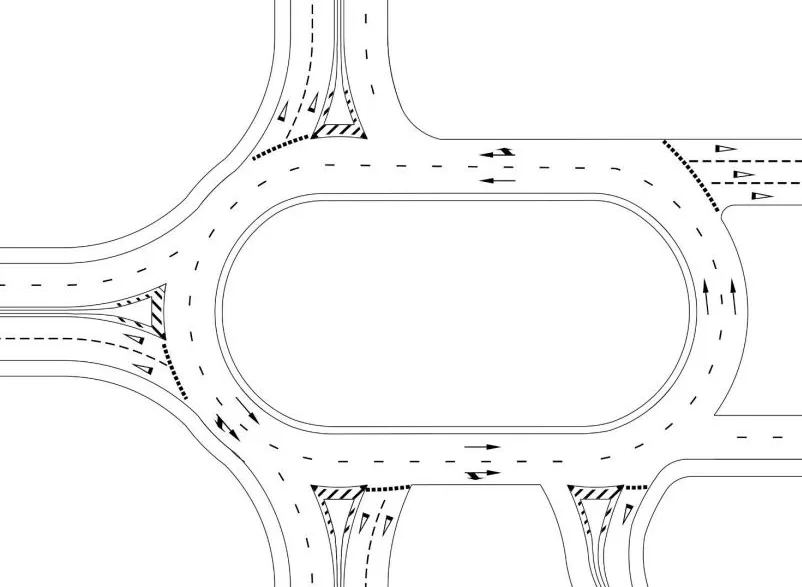
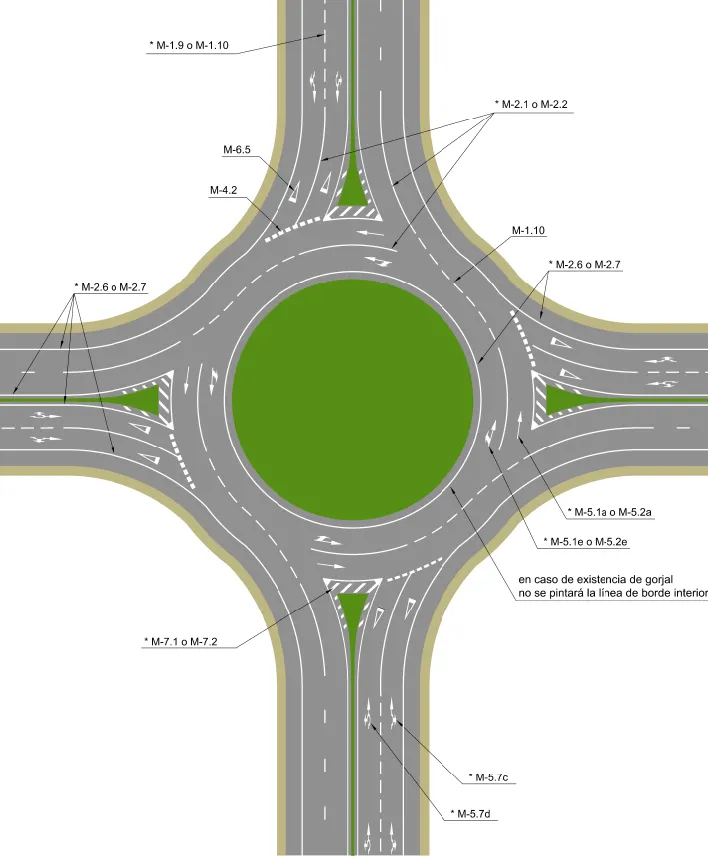
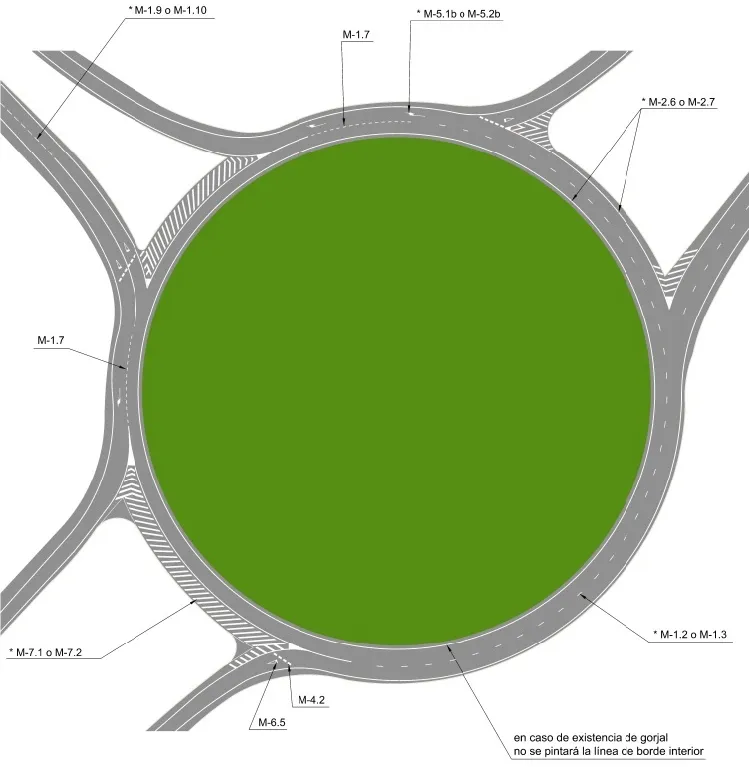
Also in article 7.2 the standard gives us this image.
Analyzing this image for standardized markings, I can’t help but notice several errors in logic and design:
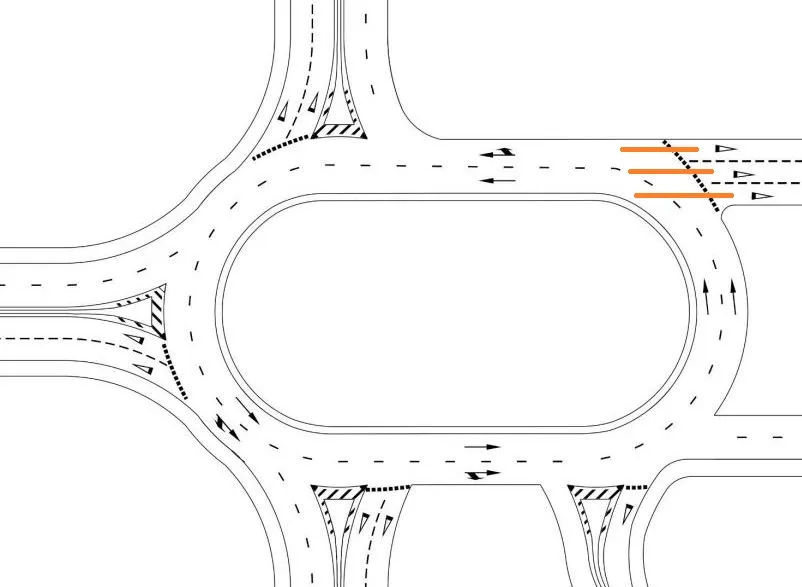
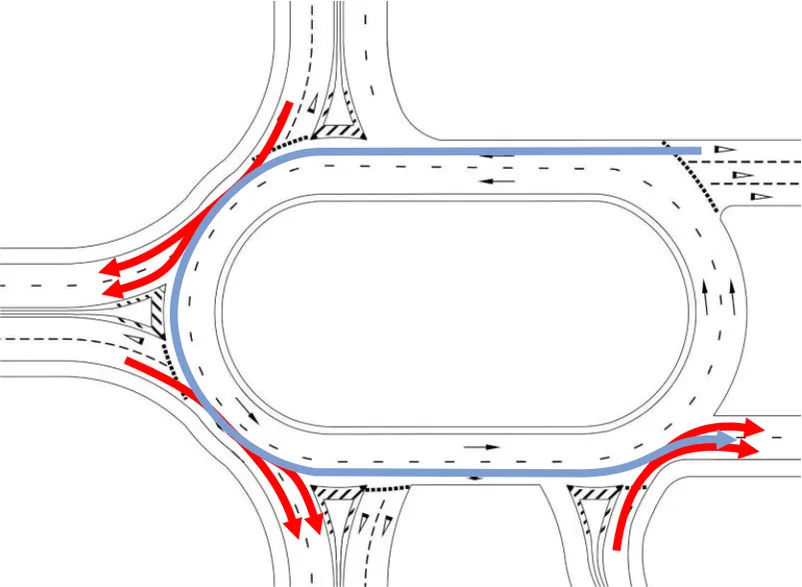
1. NEVER configure roundabouts with more lanes on secondary roads and fewer lanes on the main road of the roundabout.
Here there will be numerous conflicts between the vehicles entering the roundabout and many accidents will also occur.
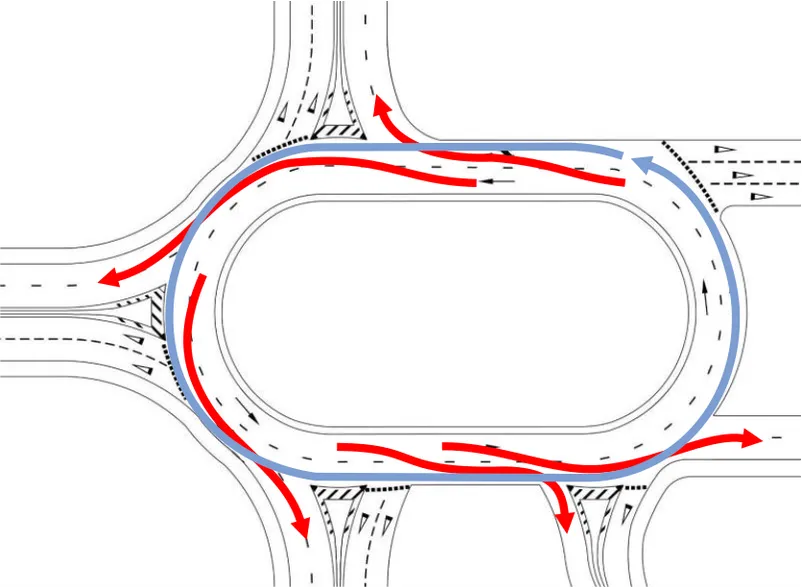
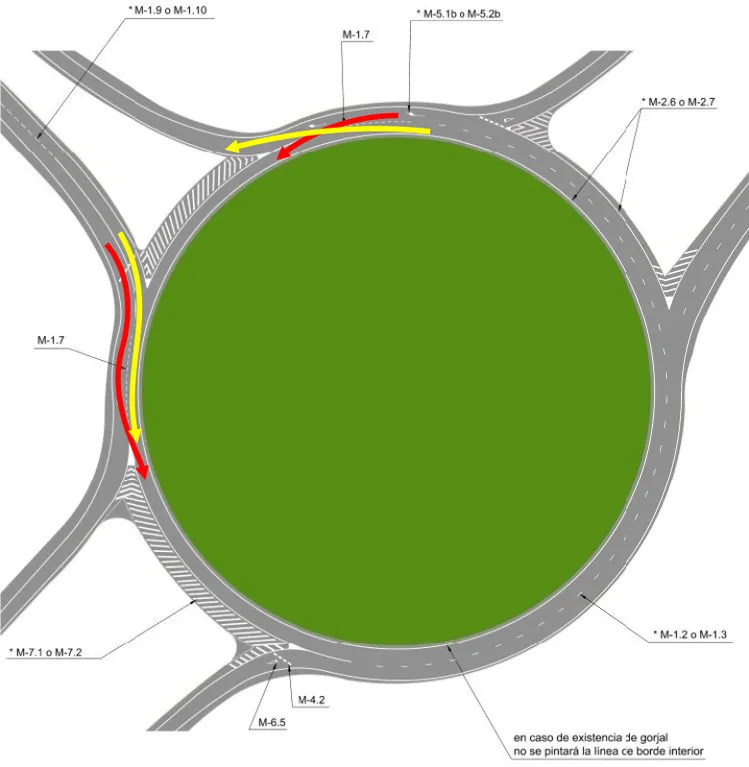
2. Spain considers it correct that the movement of vehicles inside the roundabout is done in the same way as on any other road. This means that exiting the roundabout is done from lane 1, or the outer lane of the roundabout, because the exits are right turns.
In this way, the majority of drivers will enter the roundabout from the first lane of the secondary road and continue moving until the desired exit, forcing those who want to enter the roundabout and exit at the first exit, to stop to give them priority .
Those who enter the roundabout from the second lane of the secondary road, in the second lane (inner lane) of the roundabout, will have to change the second lane with the first lane, before exiting the roundabout, in order to fit in correctly for the right turn (exit) from the roundabout.
If the traffic flow is increased, those in the second (inner) lane will not be left by those in the 1st (outer) lane to change lanes, being forced to bypass the roundabout once more. Imagine what happens if there are as many cars in the second (inner) lane as there are in the first (outer) lane, at an hour of heavy traffic. The entire roundabout will be blocked!
The fact that those in the second (inner) lane will not be left by those in the 1st (outer) lane to change lanes, and in the event of an accident those who changed lanes will be considered guilty (those in the second lane, the inner lane ), causes drivers to predominantly use the first traffic lane, both on the secondary road entering the roundabout and inside the roundabout. This creates a slowdown in traffic flows during peak hours and long queues both on the secondary roads entering the roundabout and inside the roundabout. A crowded roundabout inside can only increase the waiting time for those on the secondary roads at the entrance. In this way, the roundabouts will soon jam.
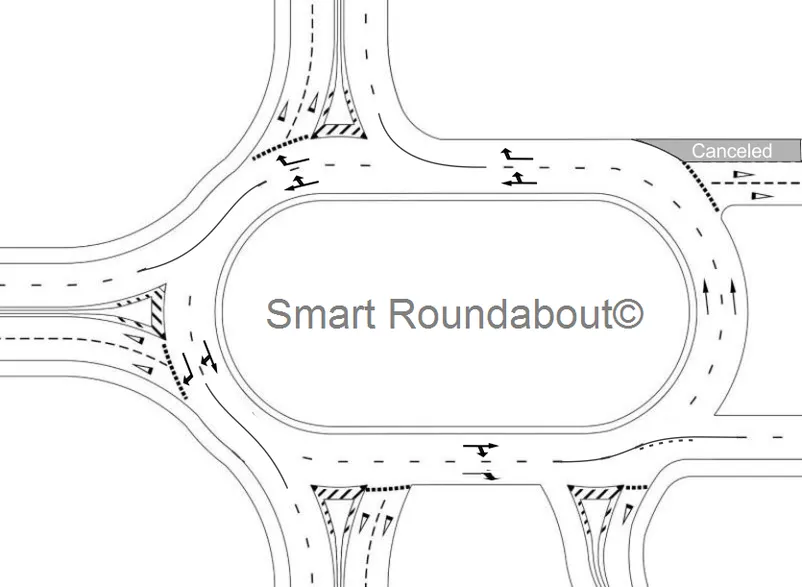
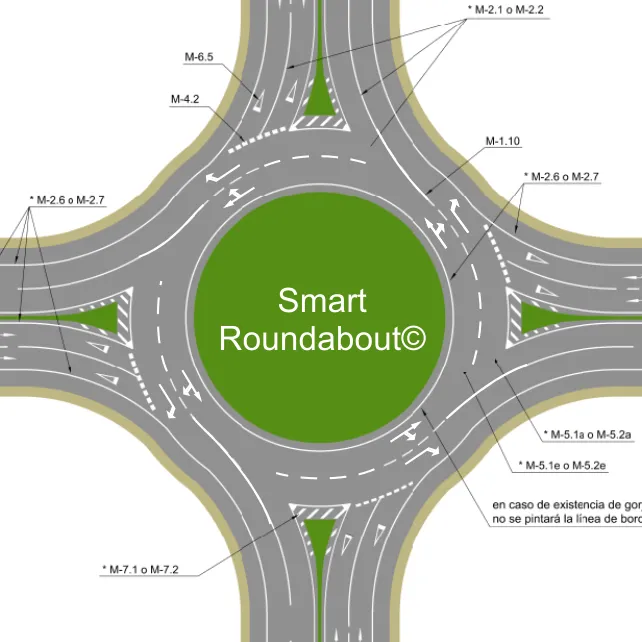
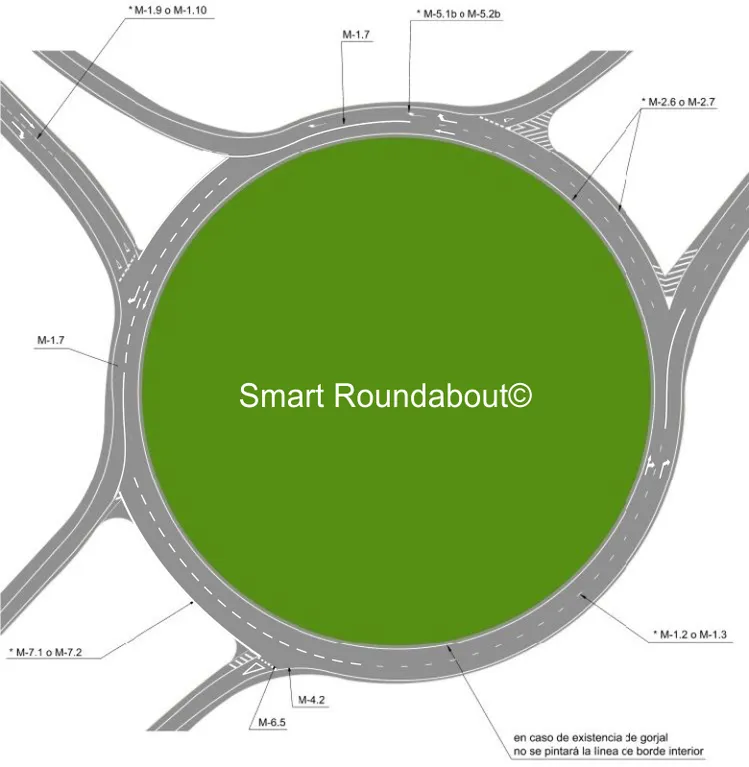
The Smart Roundabout architecture is the logical and correct architecture, which contains markings with continuous lines that eliminate conflicts, and that increase the exit capacity of vehicles from the roundabout, thus increasing the flow of traffic. The freer and more fluent the circular main road of the roundabout is, the more vehicles will be able to enter the roundabout. If the main circular road of the roundabout is full of vehicles, it will be all the more difficult for those from outside to enter the roundabout.
Depending on the traffic flows, other architectural models can be configured to increase flow on certain areas.
3. On page 160 of the Spanish standard we have an image of a classic roundabout with secondary roads with 2 lanes in each direction and two lanes inside the roundabout.
Although most engineers, architects, university professors from road construction universities consider intersection points (at the entrance to the roundabout) between vehicles as points of conflict, I am of the opinion that intersection points do not create conflicts, because those points are regulated by signs and priority markings, there being a priority agreement. Some have to give way to others, who have priority of way.
The conflict occurs where two or more drivers want to follow different routes, each considering that they have priority and can do it, especially when the road markings are missing or contradictory.
Applying the second part of the statement of the general rule from point 7.2 of the markings standardization regulation: “with arrows to the left the lanes in which it is mandatory or allowed to continue traffic through the roundabout, and with straight arrows the exit movements”.
Arrow markings are only indicative in the situation where line markings do not oblige to keep a direction. The one in the first (outer) lane will consider and has every right to continue moving inside the roundabout, and the one in the second (interior) lane will consider that he is going in the forward direction leaving the roundabout. This disagreement is a conflict, and the conflicts leads to the accidents.
Markings with continuous lines inside the roundabout shorten the distance to change lanes, forcing drivers to reach points of conflict.
A logical and correct architecture is that of the Smart Roundabout, which contains orientation arrows and markings with continuous lines to eliminate conflicts. At the same time, this architecture increases the exit capacity of vehicles from the roundabout.
In this way, no driver will be able to mistakenly consider that he has priority and everyone will know in advance which is the optimal route to follow.
Depending on the traffic flows, other architectural models can be configured to increase flow on certain areas.
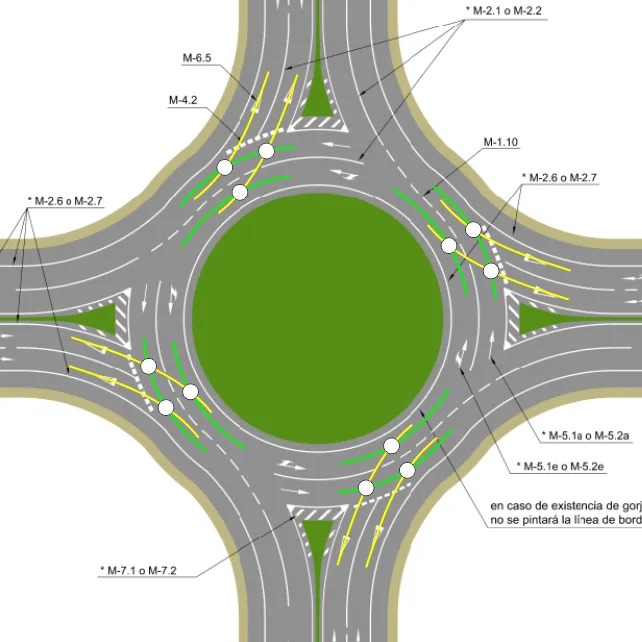
4. On page 161 of the Spanish standard of road markings, we have another image of an architecture that creates confusion.
The hatched spaces inside the roundabout create dysfunctionalities when those who enter the roundabout from the first lane, want to exit at a more distant exit. We must not forget that in Spain, most drivers use the first lane (outer lane), to travel the entire roundabout.
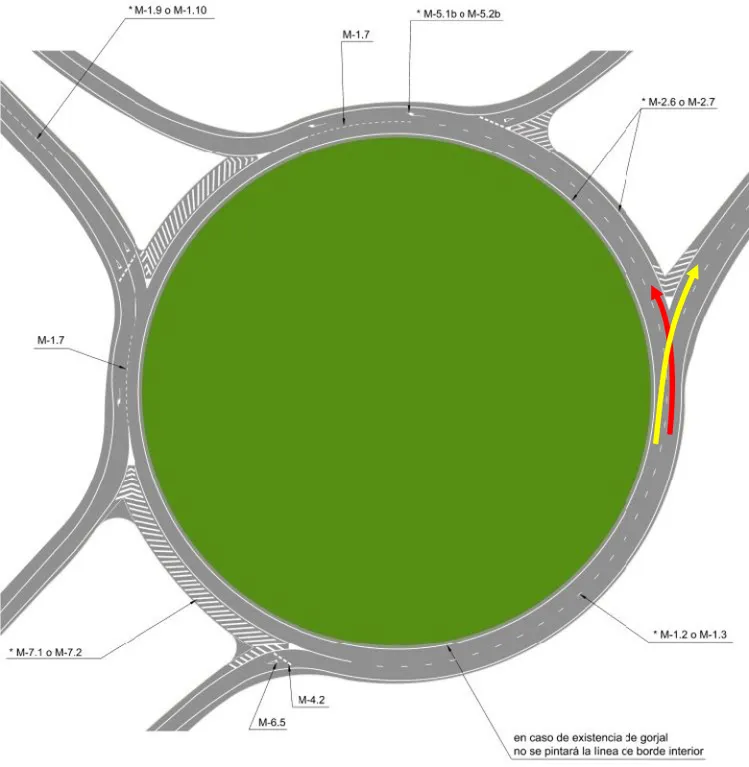
And the exit from the northeast also creates conflicts.
A logical architecture should have markings with continuous lines to prohibit these conflicts, but also to increase the exit capacity of vehicles from the roundabout.
Depending on the traffic flows, other architectural models can be configured to increase flow on certain areas.