
The devices with dispaly inside the cars
Dashboards with electronic displays are another component of modernity in the automotive industry. They replace old analog dashboards with digital screens that can display a variety of information and data about the car and driving conditions.
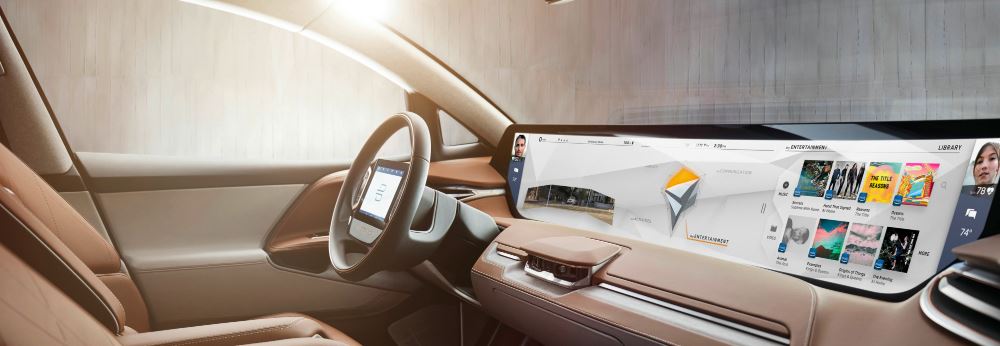
These displays can be configured to show relevant and important information for the driver, such as speed, fuel level or the status of safety systems, and in addition, they can be customized and modified to suit the preferences and needs of each driver.
In many cases, these displays can be connected to navigation systems or smartphones, allowing the user to access and control various functions and applications.
Dashboards with electronic displays offer a modern and sophisticated look, adding an extra touch of style to the interior of the car and are considered to be an evolution of technology and design in the automotive industry, but from a road safety point of view I believe they they can distract the driver, with tragic effects.
The first rule when starting driving school is to never look at the pedals, the gear shifter, or the car radio.
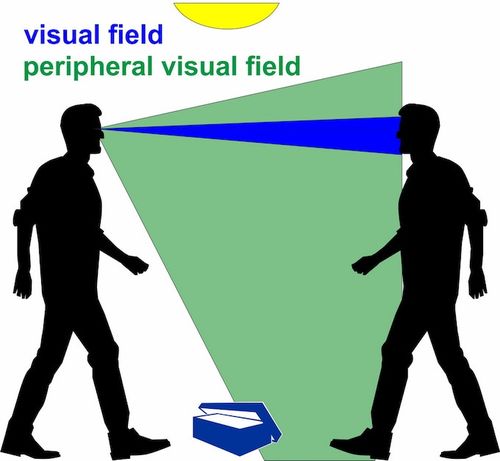
The human visual field has developed throughout evolution predominantly downward and less upward. Thus, any person will have in the peripheral field of vision a larger area at the bottom of the viewed point than above and less at the sides. You don’t have to take my word for it, you can do a simple test, put an obstacle on the floor and everyone who passes by that spot will see and go around the obstacle, whereas if you stick or hang an object on the ceiling, no one will notice him.
The peripheral visual field decreases in intensity the more the farther away the viewed point is. This is the peripheral visual perception, which any person can notice, even without having studies in this field.

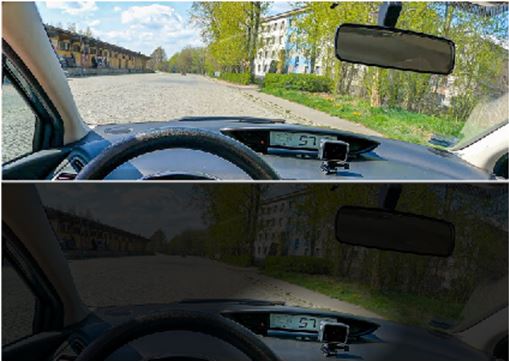
If the electronic display is between the steering wheel and the windshield, we can say that it is in the driver’s peripheral field of vision and will easily notice any alert it receives, and the look of the digital instruments will have part of the windshield area in the peripheral visual field, so will have less control over the road.
If the electronic display is outside the driver’s peripheral visual field, in the middle of the dashboard, or below it, the driver will lose all visibility of the road, because the road will be on the periphery of the peripheral visual field.
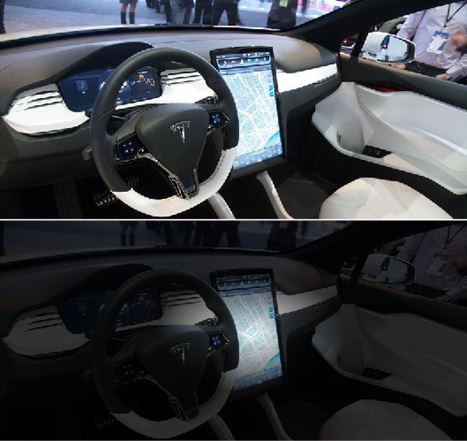
The further the information display instruments are from the road line and the windshield, the more the driver will be deprived of visibility of the road.
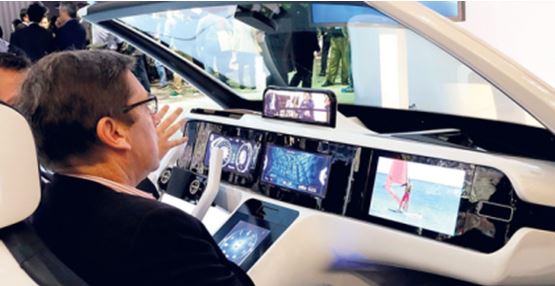
A futuristic interior is very nice, but the more optical and acoustic elements there are in the car, the more the driver will be distracted from the main concern, which is to drive the vehicle safely.
- At 50 km/h a vehicle travels 13.89 m per second.
- At 80 km/h a vehicle travels 22.22 m per second.
- At 120 km/h a vehicle travels 33.33 m per second.
To which is added the reaction time of the driver to change the foot from the accelerator to the brake pedal, and then the braking distance!
A driver needs 3 to 6 seconds to view and understand a navigation map.
Every second lost by the car driver can turn into a tragedy, and statistical data shows that millions of people are affected annually due to road accidents.
The World Healt Organization tells us that each year approximately 1.3 million people die and between 20 and 50 million people suffer non-fatal injuries, many suffering a disability as a result of their injuries, and the economic and social value of these accidents is quantified at approximately 3% of GDP, in most states.
Most of these accidents are due to carelessness, and drivers are increasingly distracted by technology, gadgets and apps. Do we need all these apps and gadgets? Of course NOT.
To avoid distracting drivers, traffic safety rules should oblige vehicle manufacturers to limit the access and operation of gadgets that are not in the field of vision (between the steering wheel and the windshield) when the vehicle is in motion, and navigation devices they should be rethought so that the information is much simpler and the display of basic information is done in the driver’s visual field.
The head-up display seems to be the safest technical solution, because optical navigation information is always in the driver’s field of vision.
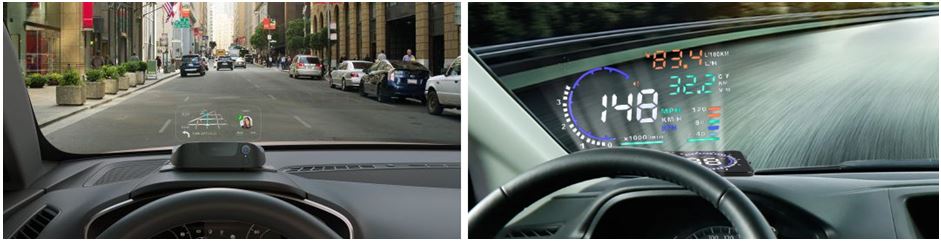
If you do visibility exercises in your own vehicle, you will find that when you look at the dashboard instruments between the steering wheel and the windshield, you will have a part of the road you are traveling on in your visual field, only eyes movement being necessary. If you look down on the center console of the car, where you will have to move your head, the road will go out of your peripheral visual field and you will no longer have any reference to what is happening on the road.