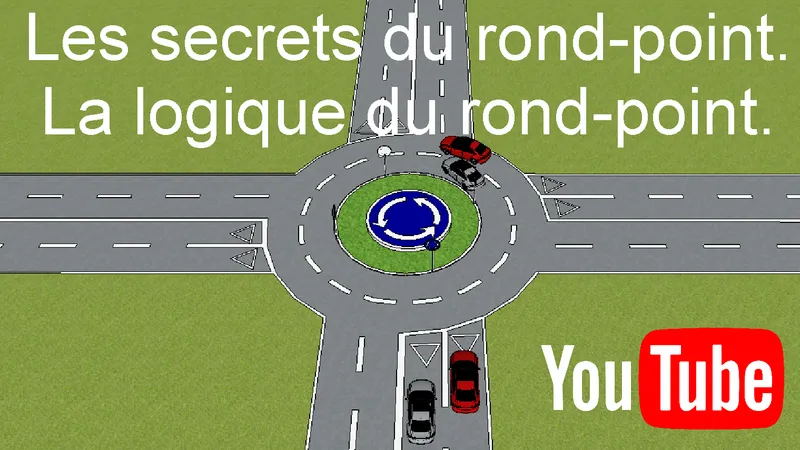
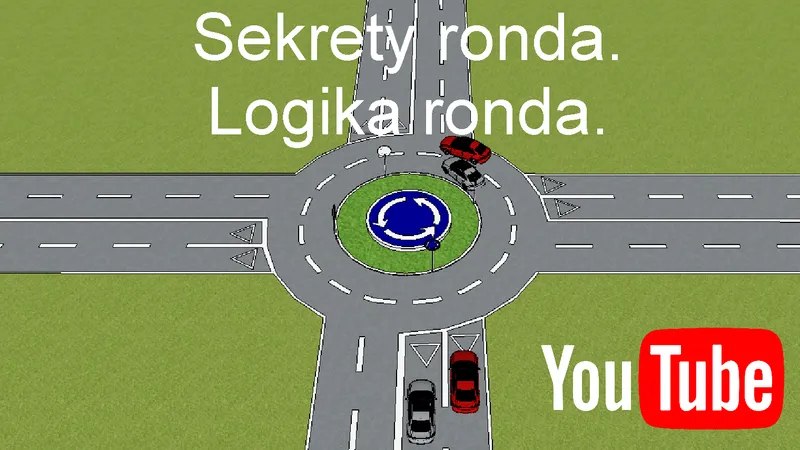
What is the roundabout? An intersection or a traffic node that includes several intersections?
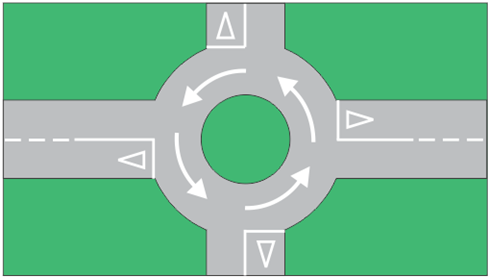
If we are to look at a small roundabout, then we might think that it is an intersection with an obstacle in the middle, where the traffic proceeds in a circular way.
The term “roundabout” appears for the first time in the Vienna Convention of 1968, which refers to the roundabout, without defining it, in article 11, point 8:
In English:
a) Immediately before or on an intersection other than a roundabout,
The word “roundabout” is composed of two words: “Round” – which means “circular” or “in the shape of a circle”. “About” – which in this context indicates movement or orientation around a central point or axis. That doesn’t mean it’s an intersection.
In Spanish:
a) inmediatamente antes y durante el paso de una encrucijada que no sea una plaza de circulacion giratoria,
where “roundabout” takes on the meaning of “squarre with circular circulation”.
In German:
a) unmittelbar vor und in einer Kreuzung ohne Kreisverkehr,
where “Kreisverkehr” means road node.
In French:
a) immédiatement avant et dans une intersection autre qu’un carrefour à sens giratoire,
where “carrefour à sens giratoire” means a special intersection with a central ring.
In Italian:
a) immediatamente prima o in un’intersezione diversa da una rotatoria.
“Una rotatoria” means the one-way belt.
In Romanian:
The word ”roundabout” was translated as an intersection, at that time there were no roundabouts, and the translator did not know how to translate otherwise.
a) imediat înainte și într-o intersecție alta decât o intersecție cu sens giratoriu,
We can notice that only in Romanian, the roundabout is translated as an intersection, and in French and Spanish legislation, the roundabout is treated as a special intersection.
The Vienna Convention of 1968 did not define exactly what a roundabout is, a positive thing today, because today’s roundabouts are no longer what roundabouts were in 1968, and today’s roundabout concept has evolved from the year 1968.
The roundabout was designed as a fast traffic node to avoid stops at intersections, with the obligation to give priority to vehicles only on one side, from the left and with the effect of streamlining traffic.
To find out what a roundabout is today, we should microscopically analyze a small roundabout, or see a large roundabout, to be able to unravel the secret of this road node.
Analyze
Spain is the paradise of roundabouts (>80,000) and there are numerous giant roundabouts. So, I will analyze a giant roundabout in the territory of Spain.
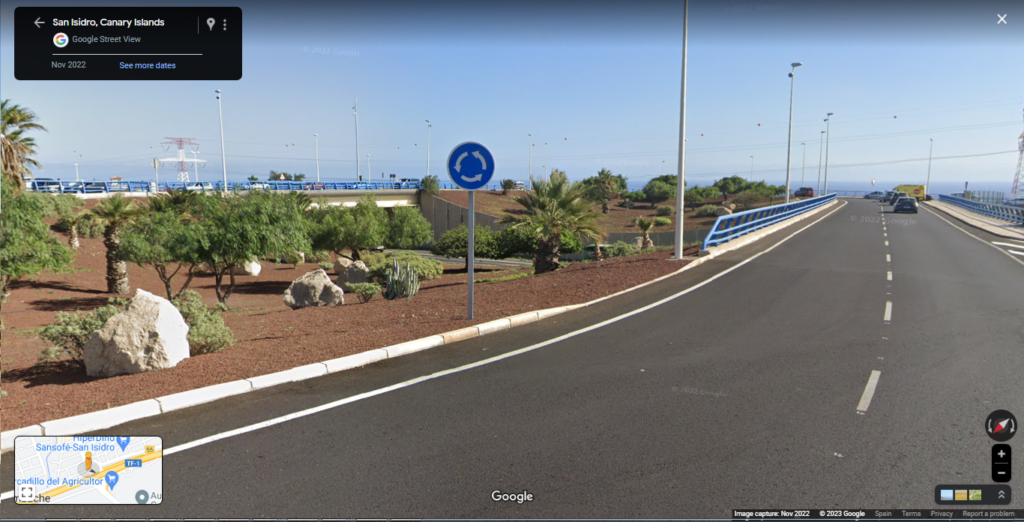
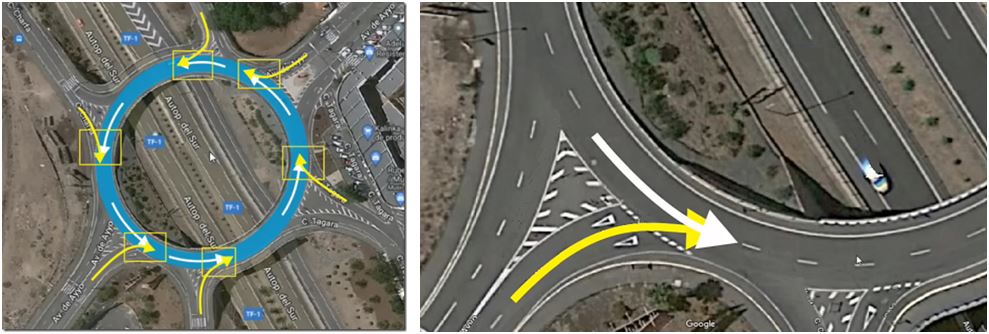
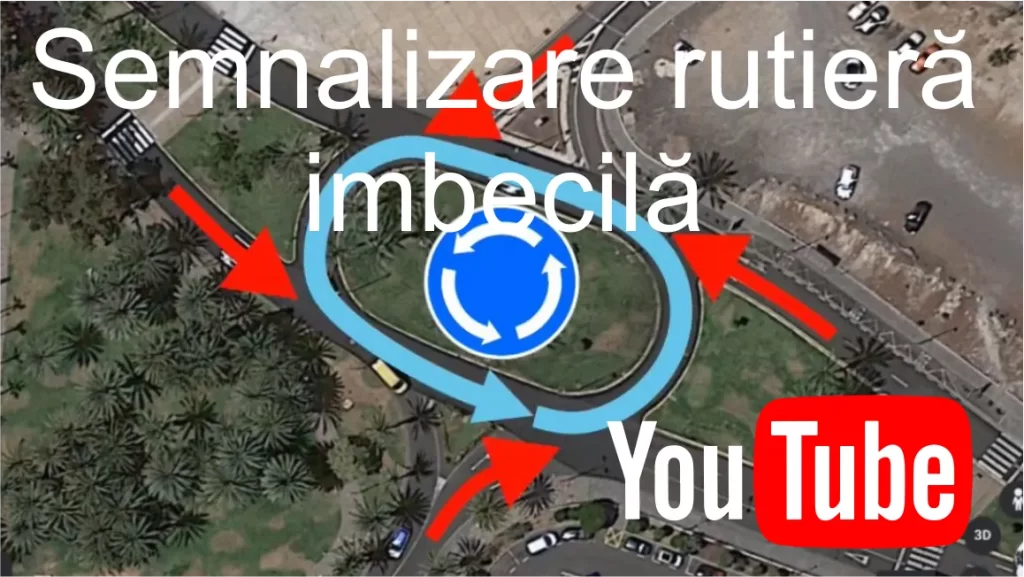
In this Google Map image
we can see that we are inside a two-lane roundabout.
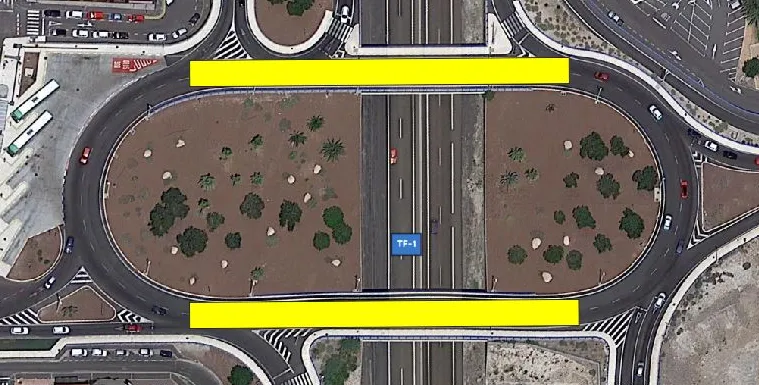
If we were to say that the roundabout is an intersection, we would have to question mathematics, which is an exact science, and which tells us that two parallel lines never intersect, and in this image you can see two parallel bridges, or two parallel road segments, which are part of a roundabout.
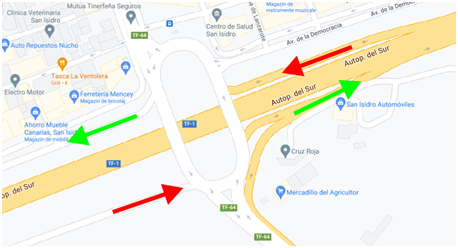
Viewed from above, the same roundabout reveals that it joins both the acceleration and deceleration lanes of the highway over which is suspended.
If the roundabout is an intersection, I can’t avoid the following questions:
- Can the acceleration lane in one way of the highway intersect with the acceleration lane in the other way of the highway?
- The acceleration lane on one way of the highway can intersect with the deceleration lane on the other way of the highway?
- The deceleration lane from one way of the highway can intersect with the deceleration lane from the other way of the highway?
The answer should be obvious to anyone.
Thus, we can say that the meaning of the word “roundabout” as it is in Romanian, that the roundabout is an intersection, is totally wrong. However, in the laws of many states the roundabout is treated as an intersection, even if it is treated as a special intersection.
Moreover, many people, some from institutions with responsibility for road safety, cannot admit that the roundabout is a one-way road. But, analyzing this roundabout, to deny the fact that in the roundabout the traffic goes in one direction, would mean that we no longer have a roundabout, but a belt with traffic in both directions, where those who enter this belt could to turn left after giving way to vehicles traveling on both the left and right sides. Or, the roundabout aims to avoid stops as much as possible and give priority only to vehicles traveling inside the roundabout on the left (right in left-hand drive states).
Thus, in the context of globalization, the free movement of citizens, the development of tourism, I think it is imperative that the roundabout has an internationally accepted definition that the roundabout is a main circular road (with priority), where traffic is carried out in a one-way and successively intersecting with secondary roads (no priority).
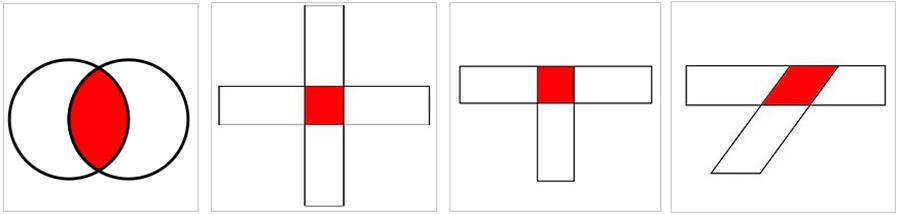
From a mathematical point of view, the intersection is represented by the set of common points of two lines, two surfaces or volumes, or the totality of the common elements of two sets:
And the intersection with the roundabout means and should be defined as just the place where the secondary road intersects with the roundabout.
The lack of a definition for the roundabout leads to some of the most hallucinatory interpretations. The Internet abounds with solutions totally contrary to logic, both from “well-wishers” who want to monetize the information transmitted, as well as from driving schools, or responsible public authorities and even from universities.
At least in Romania, the traffic police applied the law in a contradictory manner, assigning different meanings to traffic in the roundabout. 1/3 of the police officers of the country’s counties considered that those who entered the second or third lane can exit the roundabout (by turning right) from the lane they entered, considering that they will exit in the “straight ahead” direction or “to the left”, compared to the place where they entered the roundabout, 1/3 of the police officers of the country’s counties considered that exiting the roundabout could only be done from the first (right) lane, and 1/3 answered evasively, without relevance or legal support. As a result of the lobbying we did at the parliamentary level, today there is a draft law (Senate and now at The Chamber of Deputies), to define the roundabout meaning, so that the application of the law is uniform throughout the country, both by the police agents and by the courts, which also had a non-uniform and contrary practice.
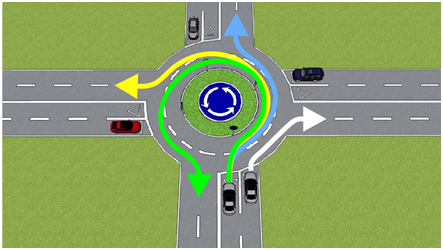
Some road safety authorities and some road administrators consider that the direction “straight ahead” inside the roundabout is exiting the roundabout, and continuing inside the roundabout is turning left. Wrong.
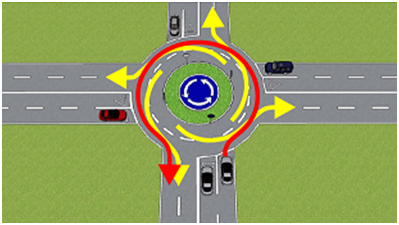
The “Straight Ahead” direction represents the circular direction of the roundabout, roundabout exits are right turns, and the “left” direction does not exist in the roundabout.
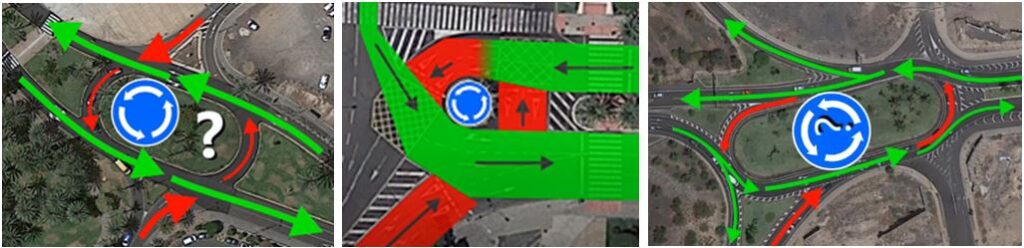
In the Canary Islands, some roundabouts may be non-priority roads and roundabout entrances may be priority roads, because road administrators and traffic safety officials have not understood how to mark and signal these traffic nodes correctly, creating confusion for the millions of tourists, and also many accidents.
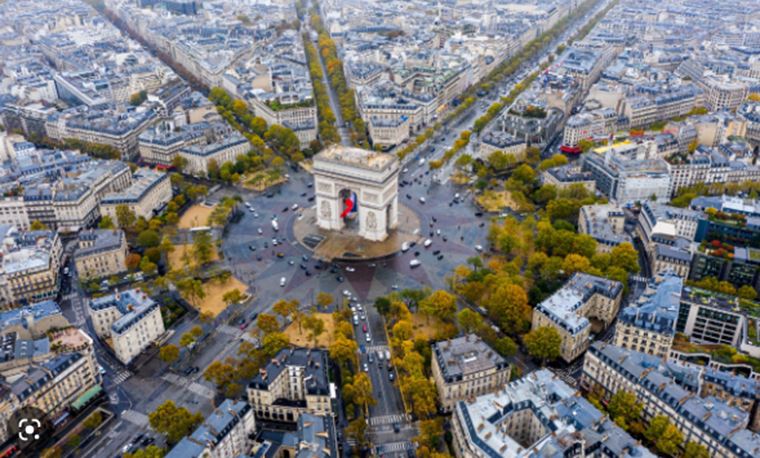
Certainly, many people think that the square at the Arc de Triomphe in Paris is a roundabout. No, it’s not a roundabout, it’s just a square with circular traffic, and those inside the square must give right-hand priority to those entering the square. Moreover, the circular road does not have marked travel lanes and drivers are totally confused. Confusion is at its maximum for the millions of tourists who pass through this place and traffic jams are frequent because it is against logic to allow everyone in and lock them inside at the next square entrance.
Functionality
This is because there are no clear and logical specific regulations for drivers, national laws do not define how multi-lane roundabouts should be driven, markings inside roundabouts are generally useless, and in some cases do not even exist (France). From personal experience, I found that only German drivers, or the vast majority of them, know the logic of the roundabout and drive correctly.
In the case of Spain, the paradise of roundabouts, the authorities responsible for overseeing traffic safety recommend conflicting solutions that can lead to accidents, or at least the blocking of roundabouts.
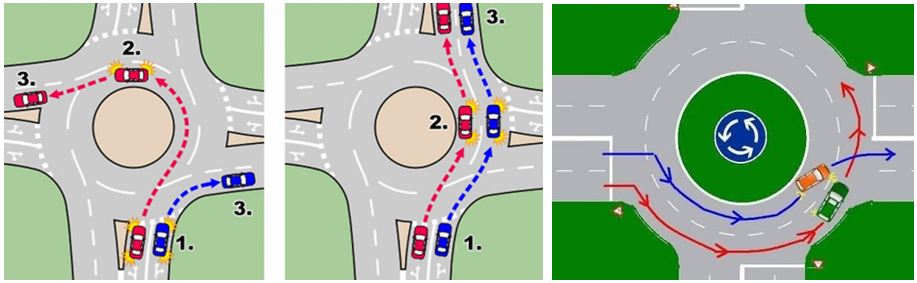
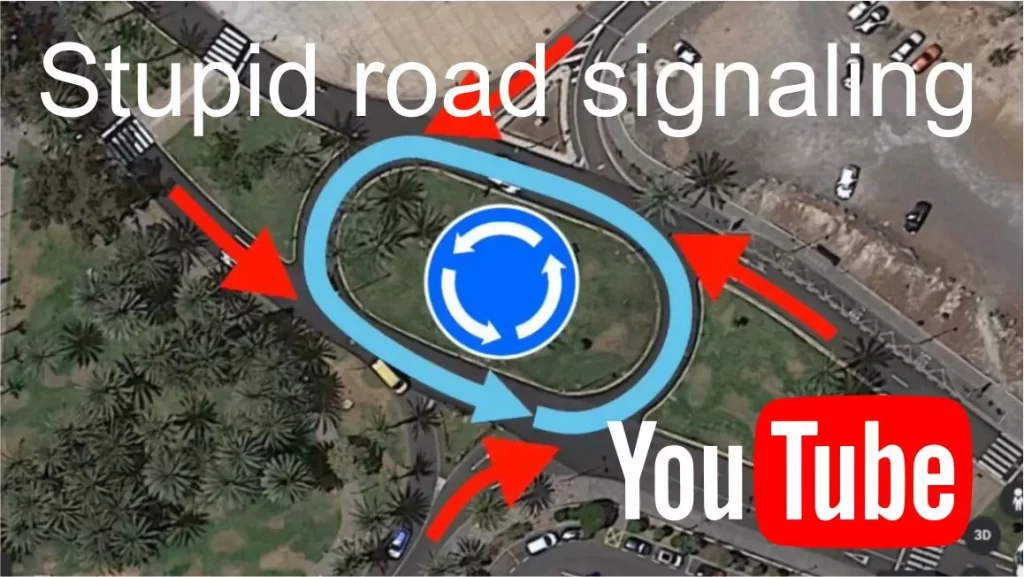
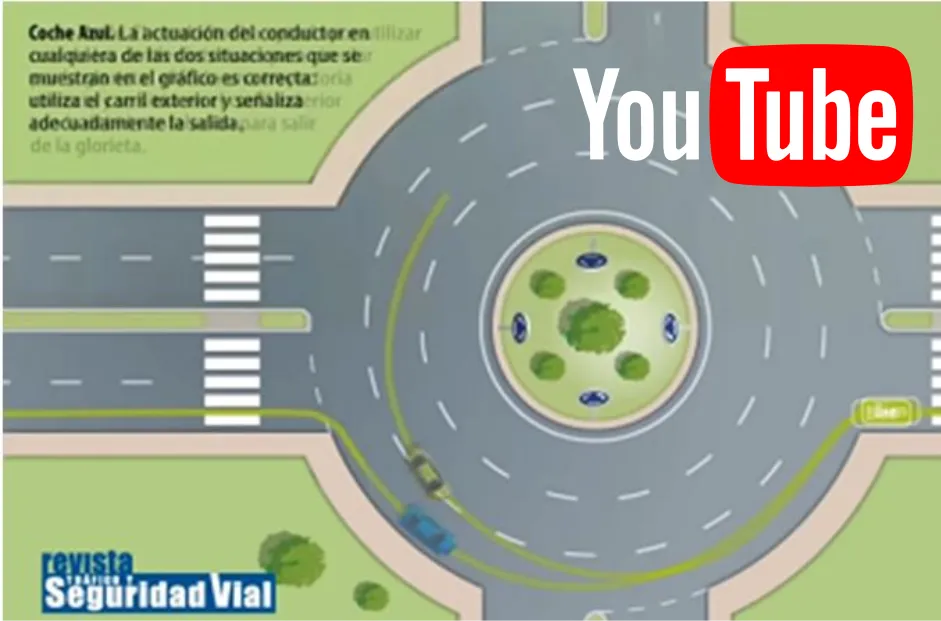
The recommendation of the General Directorate of Traffic (DGT) in Spain leads to conflicts and accidents.
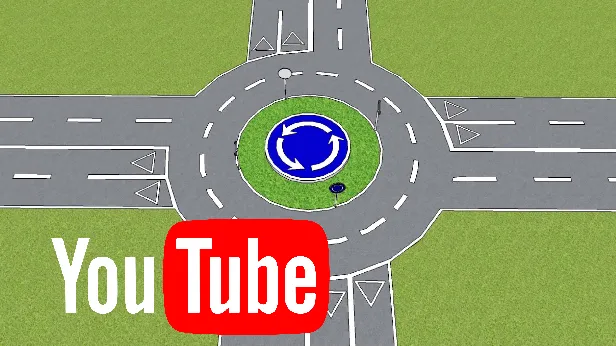
You can watch the explanation of the logic error in this video:
In the same way, or worse, driving schools and their instructors, form the future drivers who will never seek the logic of safe and smooth traffic, but will do as they learned in driving school, considering that this model is right.
Driving test examiners do not have any requirements regarding these aspects either.
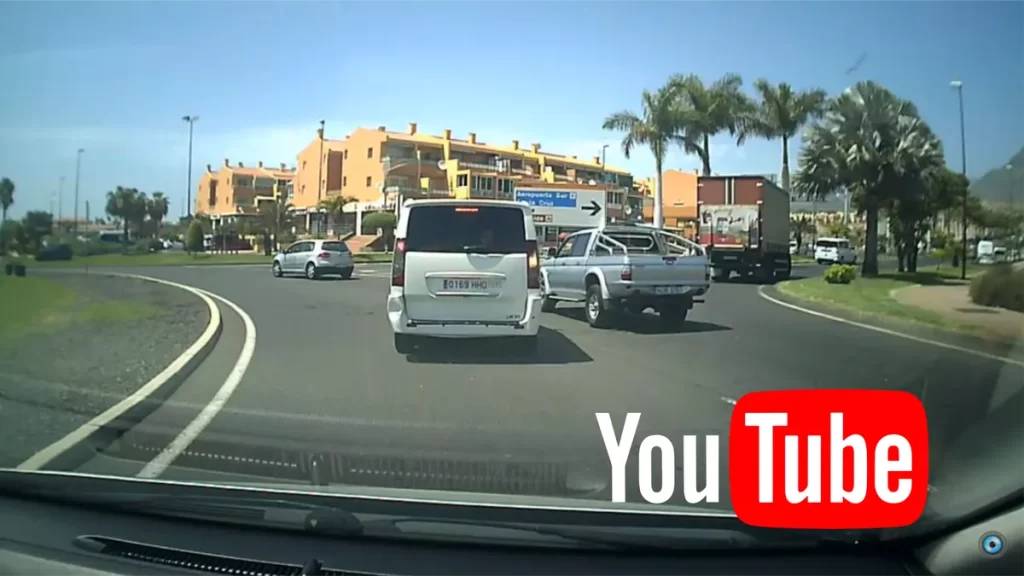
In Spain there are more than 80,000 roundabouts, most of them blocked due to drivers who mainly use the first lane (outer lane) of the roundabout, thus blocking all entrances and exits from the roundabout and affecting the traffic of vehicles traveling correctly in the roundabout.
A vehicle that will use only first lane (outer lane) of the roundabout until exiting the roundabout, will block the access of all vehicles that want to enter the roundabout and exit at the first exit,
but also the exit of vehicles that entered the roundabout correctly and logically and want to exit the roundabout at the 2nd, 3rd, 4th or last exit.
The laws of physics tell us that smooth traffic should avoid stops, and the roundabout was designed as a road node to avoid stops. For this, once you have entered the roundabout, you should have the transit of the roundabout without stopping and without intersecting with other vehicles traveling in other lanes.
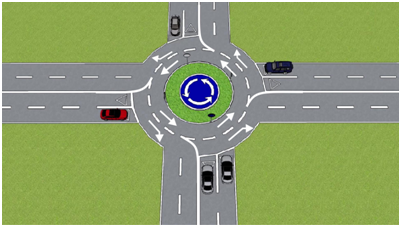
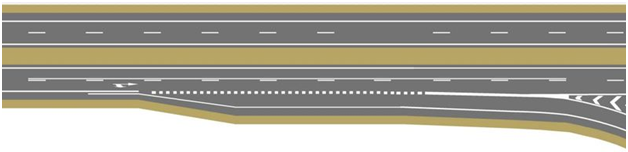
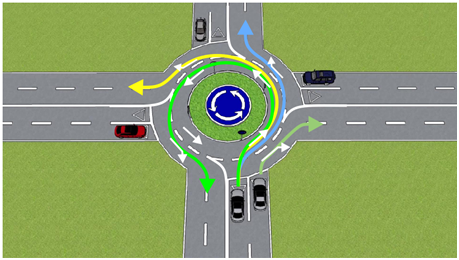
The logical solution for multi-lane roundabouts is for the first lane (outer lane) to be used for exit only,
like the deceleration lane on the highway.
In this way we create a junction between those who want to enter the roundabout and those who want to exit at the first exit, and a bifurcation for those who exit the roundabout and those who continue moving inside it. Thus, those who will cross the roundabout and want to exit at the first exit, will enter the roundabout from the first lane and will be able to exit unhindered, after giving priority to pass at the entrance, only to those who choose to exit and access the first lane (outer lane).
Those wishing to exit at the second exit or later, should enter the roundabout in the 2nd lane (inner lane), with an intersection before the exit should change the second lane (inner lane) with the first lane ( outer) and exit from the roundabout, without conflicts with vehicles from first lane, as those in first lane were forced to exit at the previous exit.
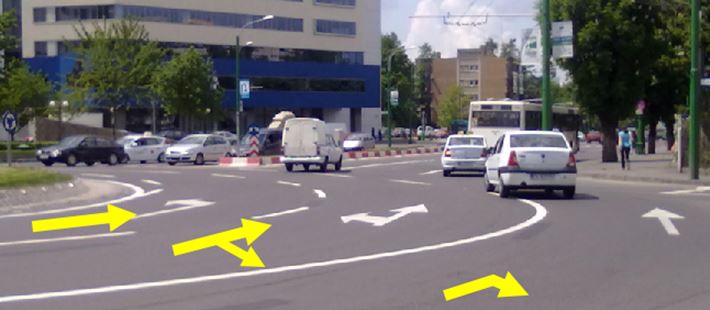
But, just a written rule would not be enough. In world traffic there are billions of drivers who have learned otherwise, often wrongly, and will not soon comply with the new rule of using the first lane (outside lane) only for exiting. In order for all drivers to be able to use the roundabout according to a new rule, a logical rule, it would be necessary for the general rule to be supplemented with the obligation of appropriate markings. Authorities should draw a marking with a clear pattern to follow in the roundabout, to drawing solid lines prohibiting the continuation of drivingthe roundabout from the first lane (outer lane) and right direction arrows.
In this way, after giving priority (to those on the left) when entering the roundabout, all vehicles will exit without conflicting with the path of other vehicles traveling through the roundabout, and those intending to exit at the first exit will do so from the first lane, which will always be free, improving both traffic flow and especially road safety. The principle of centrifugal force should be relevant in the dynamics of roundabout fluidity.
The first lane (outer lane) of the roundabout should be used for exit only, just as the deceleration lane on highways is used for exit only. In this way conflicts between vehicles traveling inside the roundabout and following different trajectories are eliminated.
On YouTube you will find a lot of videos of driving schools or competent authorities that not only defy logic, but are simply threats to road safety! Those learners who learn from those patterns will become a public hazard to traffic when they get their driver’s license.
The correct option is the logical option. Everything that goes against logic is wrong, the laws of mathematics or physics are above worldly laws.
This is the correct version:
In conclusion, I believe that in order to raise the level of road safety, the correct definition of the roundabout and the application of road markings that are easy to identify and understand by all traffic participants are required, and in this way all the roundabouts in the world can be transformed in fast (fluid) traffic nodes, and traffic participants can transit them in complete safety.
The DEFINITION I propose would be the following:
The roundabout is a traffic node consisting of a main one-way road with a circular way, which successively intersects with secondary roads on the right side (on the left side – in countries where traffic is carried out on the left side). In multi-lane roundabouts, the first lane will be used exclusively for exit and the road administrator will mark the exits from the roundabout accordingly with solid curved lines. Stopping, stationary and overtaking are prohibited in the roundabout.
In this way, all roundabouts will receive the fluidity and safety for which they were designed.
In the Roundabout, the forward direction represents the gyratory, circular, or rotational direction!
The direction to the right represents the exits from the Roundabout.
Left direction DOES NOT EXIST at the roundabout!
WARNING: changing the architecture of a roadway, should take into account the human factor, the fact that people do the repetitive things from memory, acting reflexively according to previously known patterns. When changing the architecture of a roundabout, it is necessary that the first markings applied are temporary yellow markings, for a period of at least 3-6 months, so that all residents who have driven through that place before can identify by the yellow color of markings, the novelty aspect and thus to be aware of the changes made.
Neither you, don’t see traffic signs when you drive repetitively on the same road, and if the markings changed overnight, there’s a 99.99% chance you’ll run them over.