Smart Safety Solutions, Smart Roundabout

Menu Design

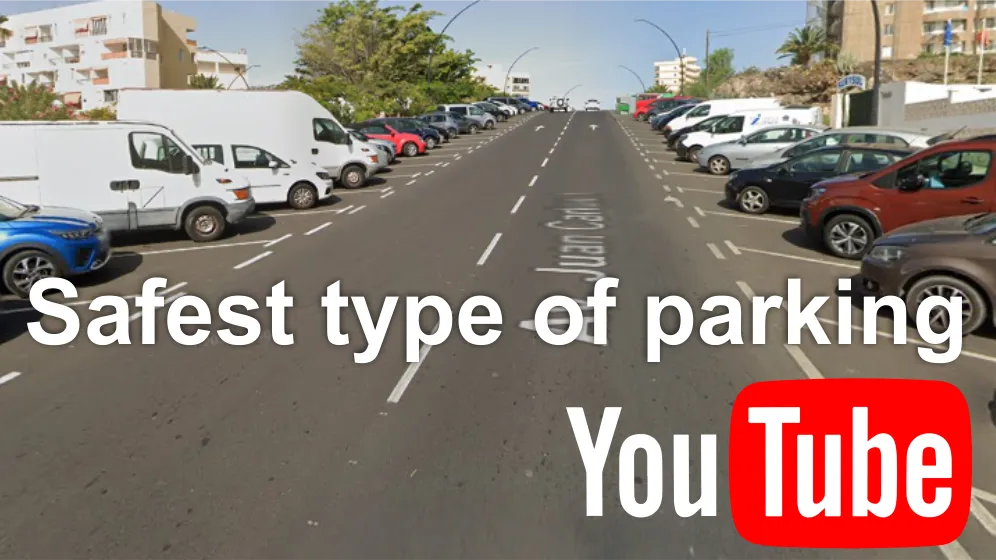
What is the safest type of parking?

Although it seems a simple and free of danger matter, the architecture of the parking can influence the safety of the road users, parking entry and exit maneuvers, as well as accessing a vehicle in the roadway area can have repercussions both in terms of safety and fluidity.

Exiting the parking lot backwards is as dangerous as entering with back in a intersection, or backing out of the yard or garage.

Most urban street parking is on the side of the road, on the right side (and on the left side in the case of one-way road) and the parking spaces can be:

1. Parallel to the axis of the road

2. Perpendicular to the axis of the road

3. Oblique to the axis of the road and here we have two models:

3.1 At a sharp angle to the axis of the road.

3.2 At an obtuse angle to the axis of the road.

What is the most efficient parking model from the point of view of safety, but also of traffic flow? Some will ask what is the importance of parking lot architecture, not knowing that it is very important, both for fluidity and especially for safety. Is there any difference regarding parking model safety? Let’s see.

1. The parking parallel to the axis of the road

These are the most common parking models, but the number of parking spaces is less compared to other models, due to the fact that a parking space consumes the lengths of all parked cars and, in addition, a space between them. The entrance to the parking place is done under safe conditions.

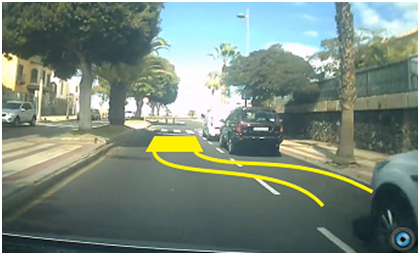
As soon as the driver notices a free place, he will stop the car in the traffic lane, and the cars behind are obliged to stop behind. To maneuver the vehicle, the driver has visibility in the rear-view mirrors.

Exiting the parking space is done facing forward, easily and safely, the driver has visibility both when entering and exiting, in the rear-view mirrors.

Access to the trunk is done safely, from the parking lot and not from the road.

However, there is a risk that the driver or the passenger on the left rear, will not be noticed in time in the road, when entering or exiting the car, especially when the road is on a curve to the right.

2. The parking perpendicular to the axis of the road

It is the most common model and provides a greater number of parking spaces compared to parking parallel to the axis of the road, but it is the most inefficient model of parking because it presents the greatest risks in operation.

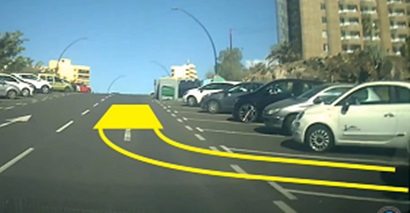
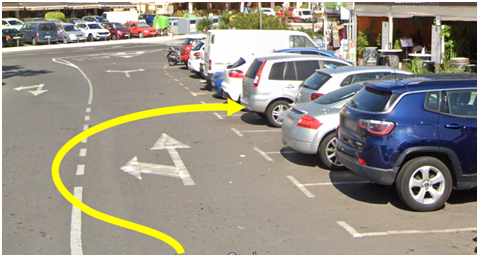
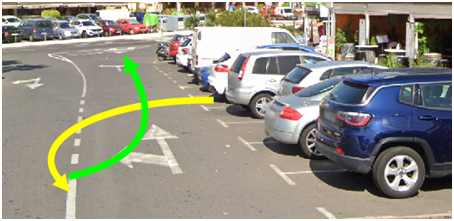
Most drivers will want to access the vacant parking space by performing this maneuver by facing into the parking space. No vehicle will be able to execute the right turn maneuver and enter the parking space in the first lane of the direction of travel, due to the steering angle of the vehicles and due to the fact that the required circle arc is too small.

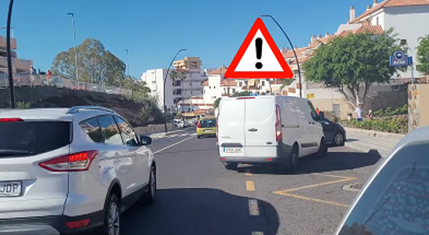
A larger circle arc is required to perform this maneuver. Thus, those who want to take a parking space will have to exceed the limit of the travel lane and thus will have to either execute the maneuver from the second lane or from the opposite direction. That means a traffic slowdown in more than one lane. Even for those who will enter from the second lane, or from the opposite direction, they may require forward/backward maneuvers to enter the parking space correctly.

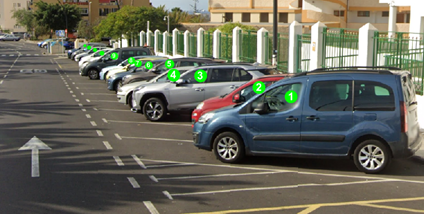
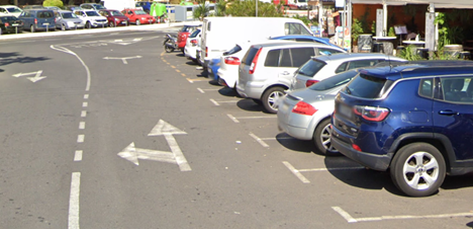
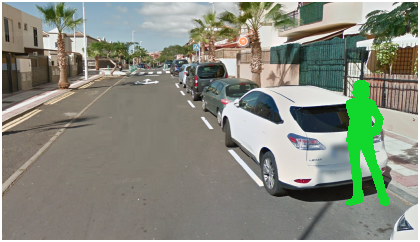
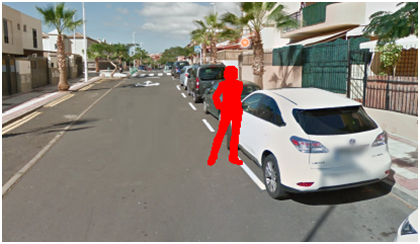
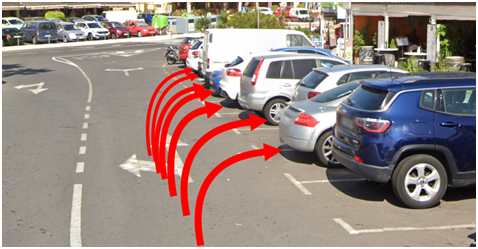
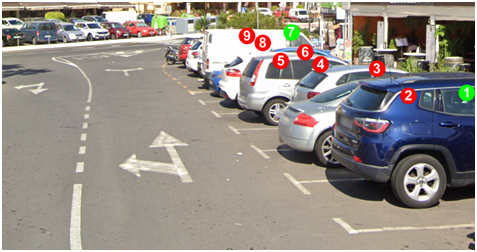
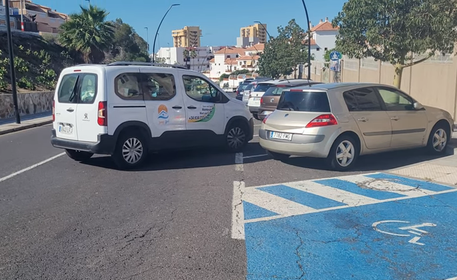
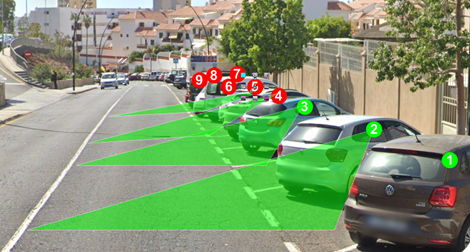
When exiting the parking lot, drivers of vehicles parked perpendicular to the side of the road will not have visibility to ensure that no vehicle is traveling in the first lane at that time, in order to be able to back out of the parking space. Moreover, if a commercial vehicle without windows, or a taller vehicle, is parked to the right of one’s own vehicle, visibility is reduced to zero, so entering the traffic lane will be done blindly, i.e. without the driver knowing if in that moment, a vehicle is moving on the first lane. The risk of accidents is maximum! As you can see in the image, you can only see the driving position for the first vehicle in the line-up, and only this driver will have visibility of the traffic on the first lane when exiting the parking lot.

For the other parked vehicles, the driving position is hidden by the vehicles parked on the right side. You can’t see the driving position, and also the parking lot drivers can’t see you either.

The exit from the parking lot will also be done in the second lane, or in the opposite direction, perhaps even at a wider angle than to entrance, when the maneuvers were carried out facing.

The maneuver to enter the carriageway, in the lane of the road with the back is a dangerous maneuver.

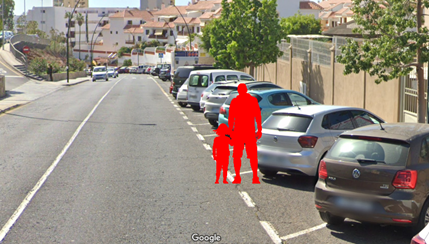
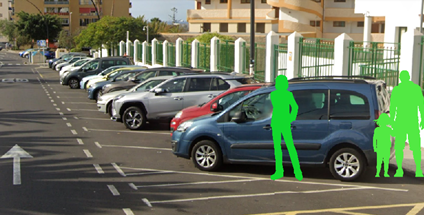
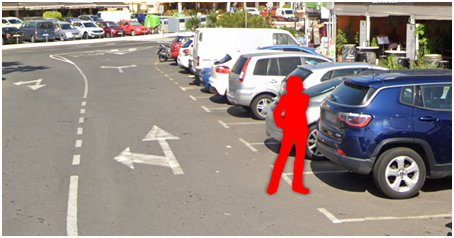
The driver’s exit and entry from/into the car is done safely from the parking lot, but accessing the trunk for loading/unloading goods is done at the risk of the driver’s presence on the roadway, in the path of vehicles in the first lane. At night the risk is increased.

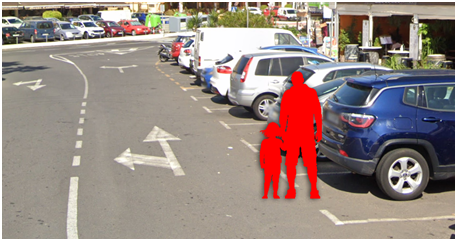
If the driver is accompanied by a child, the risk of an accident is much higher, a child is not aware of the risk of his presence on the road!

3. The oblique parking on the axis of the road

3.1 The parking at a sharp angle to the axis of the road

Parking at a sharp angle to the road axis is a frequently met parking pattern because more parking spaces can be configured than parallel parking to the road axis, and it seems to be a model favored by architects and road managers.

This parking model provides direct and quick access to the parking space, so drivers can enter the parking space without difficulty. Problems and risks occur on the way out.

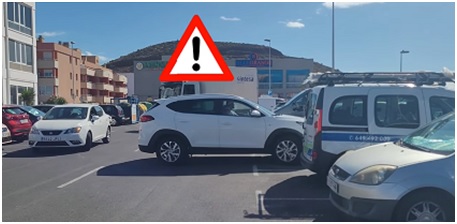
When exiting the parking lot, short cars can obtain a correct exit trajectory, but for long cars it is necessary to exceed the space of the first lane and enter with the back into the second lane or the opposite direction.

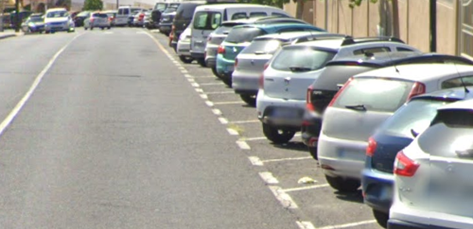
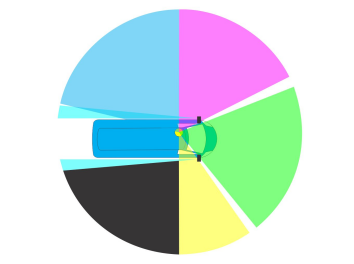
Drivers of vehicles parked at this angle have reduced visibility in a very small space to the corner of the car parked on the right, to ensure that there are no vehicles in the first lane when exiting, to be able to back out safe of the parking. As can be seen, we have no visual contact with the driver’s position of parked vehicles except in the immediate vicinity, this means that their drivers will not see us when they intend to leave the parking lot either.

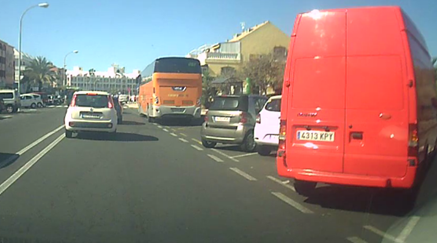
Also, if a commercial vehicle without windows, or a taller vehicle, is parked to the right of your own vehicle, visibility is reduced to almost zero, so entering the traffic lane will be done almost blind. The maneuver to enter the roadway backwards is a dangerous maneuver. The risk of accidents is high!

Drivers of commercial vehicles without rear windows are also unable to ascertain whether there is any vehicle on the road at the time, as this is the blind spot of commercial vehicles.

BLIND SPOT

 Native front visibility

Visibility in rear view mirrors

Right visibility by turning the head

Left visibility by turning the head

Visibility left by sticking your head out the door window

Total lack of visibility


Accessing the trunk to load/unload goods is done at the risk of the driver’s presence on the roadway, in the path of vehicles in the first lane. At night the risk is increased,  the presence of a child, also represents a major risk.

3.2 Parking at an obtuse angle to the road axis

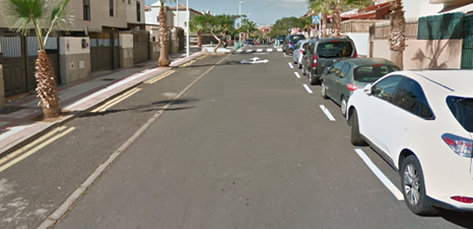
Parking in an obtuse angle to the axis of the road is a very rare met parking model, although it is the pattern that offers the greatest safety and the best fluidity.

The entrance to the parking place is done under safe conditions. As soon as the driver notices a free space, he will stop the car in the traffic lane, and the cars behind are obliged to stop behind him, the parking maneuver making in safe.

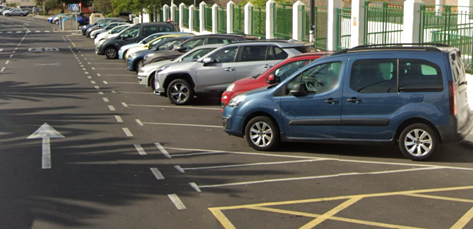
At the exit, no matter what type of vehicles are parked on the side, all drivers will have maximum visibility when starting the car, being able to secure themselves at a long distance, if at that moment other vehicles are driving in the first lane. As can be seen, we have visual contact with all the driving positions of parked cars and by default and their drivers see perfectly if there is a vehicle in the road lane to give it priority.

Accessing the trunk as well as access to the car is done from the sidewalk, or from the parking space, without any risk for them or for traffic safety.

In Conclusion: the oblique parking lots, at an obtuse angle to the axis of the road, are the safest and easiest to access and should be the standard model in street parking architecture if we want safety and fluidity.

Scroll to Top