NTSB (National Transportation Safety Board) estimated that 80% of deaths and injuries resulting from rear-end collisions could be prevented by collision avoidance systems, which are available in some cars but not required in all.
About 1.7 million rear-end collisions occur on US roads alone each year (Source: The Washington Post). For other territories we did not find statistical information available.
The law firm Sam C. Mitchell & Associates published on its website, that 40% of all car accidents are rear-end collisions.
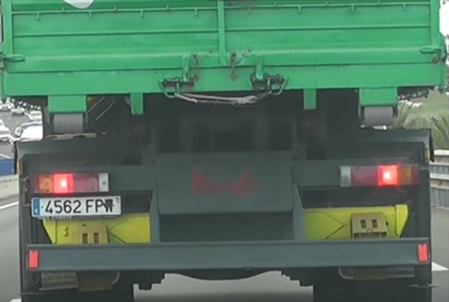
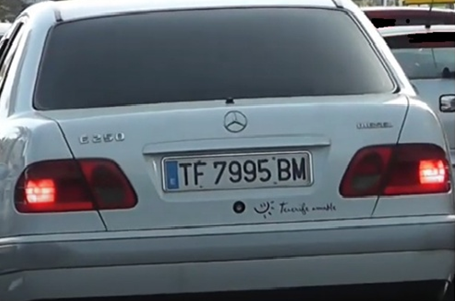
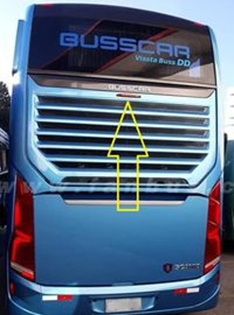
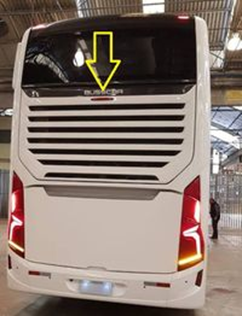
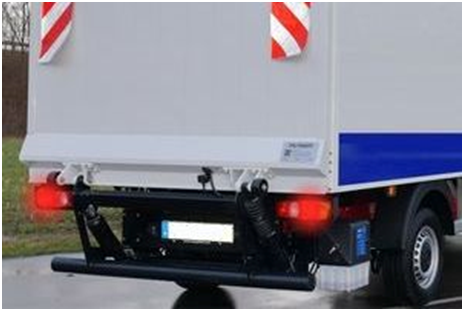
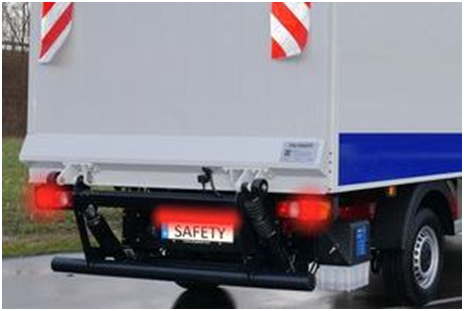
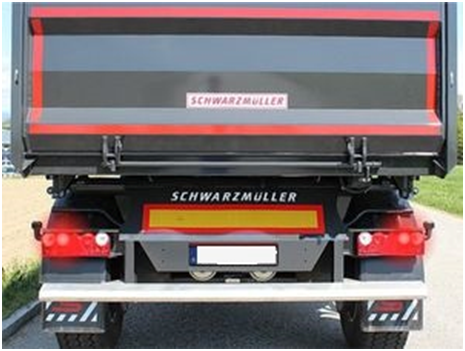
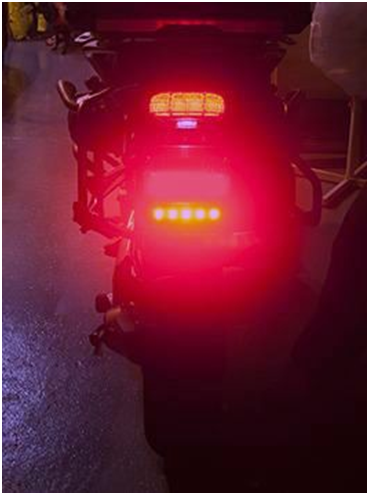
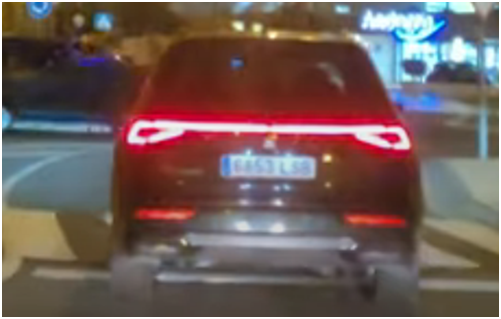
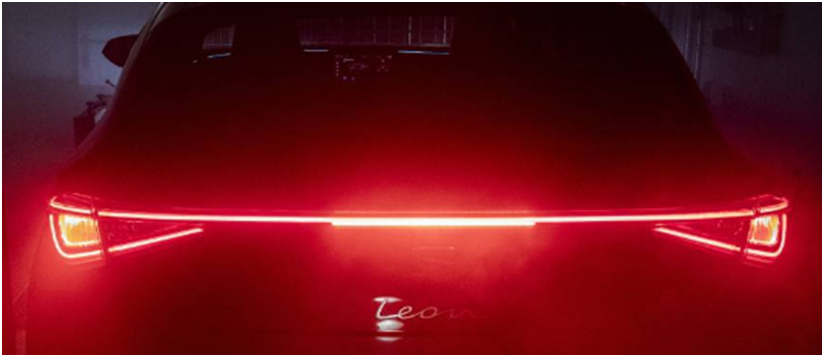
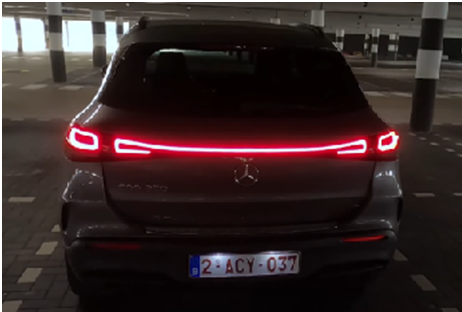
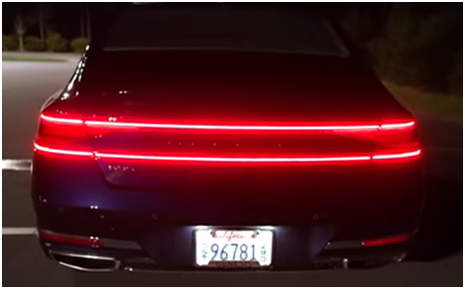
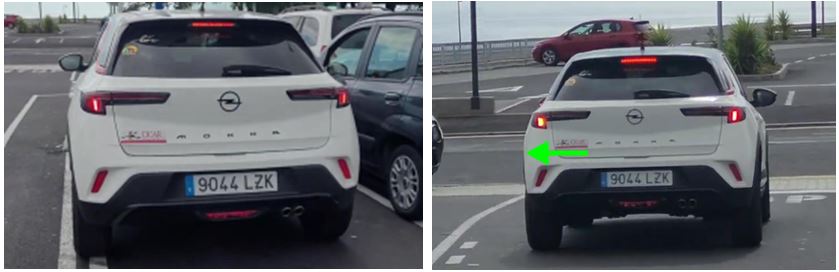
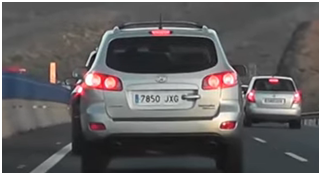
You are behind the wheel, and after looking in the rearview mirror, speedometer, radio, navigation, etc., etc., you see one of these images:
These are tail light or brake lights?
Are you confused?
At 50 km/h, a vehicle travels 13.89 m per second.
At 80 km/h, a vehicle travels 22.22 m per second.
At 120 km/h, a vehicle travels 33.33 m per second.
To which is added the reaction time of the driver to change the foot from the accelerator to the brake pedal, and then the braking distance!
Often a second of confusion could mean a rear end accident. An accident means property damage, medical costs, trauma, or even death.
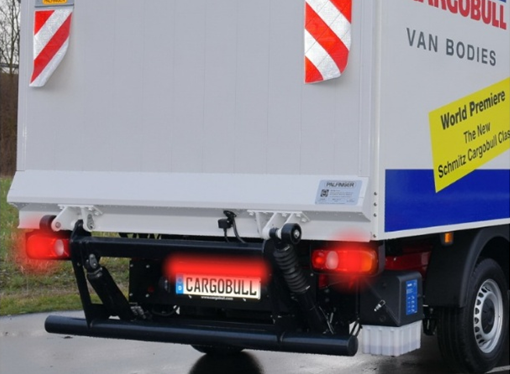
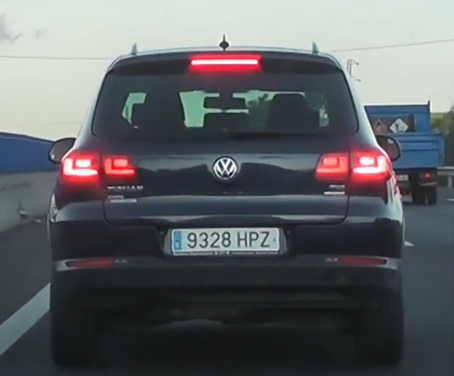
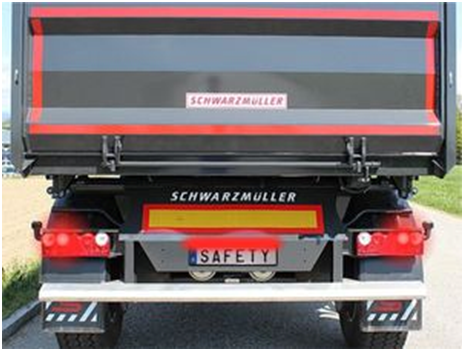
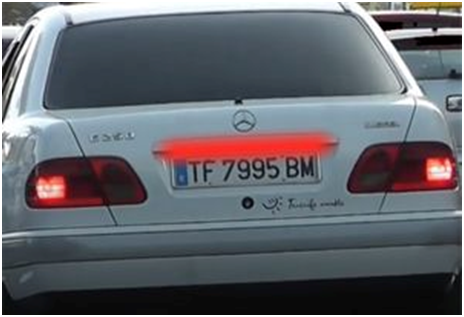
Let’s repeat the experience with these images.
Tail light or brake lights?
I think it is clear to everyone without any confusion that these vehicles brake and the driver behind will react immediately without wasting a second.
The third red light is the brake!
In a second of hesitation you will travel over 14-33 meters without doing anything. You’ll lose another second before your brain makes the decision to brake and put your foot on the brake pedal, meaning you’ve traveled over 28-66 meters before you start braking behind a vehicle that’s already in braking over 28-66 meters.
A second can make the difference between accident and safety, between life and death!
When lose a second or more:
When things are clear:
While more and more states have made it mandatory to use daytime running lights as well, the perception of brake lights has decreased, it can be difficult or confusing for drivers in queues for various reasons.
If in the case of cars there is a legal obligation for manufacturers to install a 3rd brake light from many years, in the case of trucks, vans, trailers, semi-trailers, buses, motorhomes, trolleybuses, trams, etc., there is no such obligation.
Furthermore, the installation of such devices to effectively signal commercial vehicle braking is prohibitive from a regulatory point of view.
Article 6.7.4.2.2. from Regulation no. 48 of the Economic Commission for Europe of the United Nations (UN/ECE):
For S3 or S4 categories devices: The horizontal plane tangential to the lower edge of the apparent surface shall: either not be more than 150 mm below the horizontal plane tangential to the lower edge of the exposed surface of the glass or glazing of the rear window, or not be less than 850 mm above the ground. However, the horizontal plane tangential to the lower edge of the apparent surface of a S3 or S4 category device shall be above the horizontal plane tangential to the upper edge of the apparent surface of S1 or S2 categories devices.
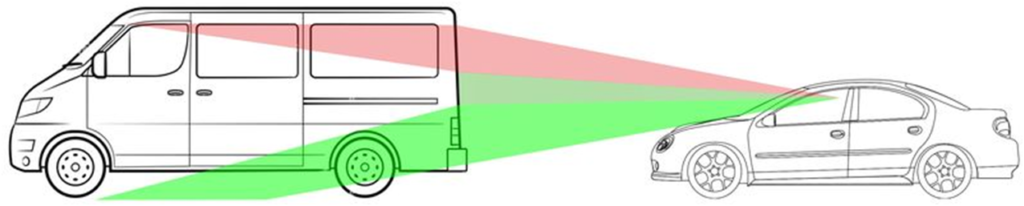
In the case of cars with windows, the logic of placing the 3rd high beam light as close as possible to the rear window space of the vehicle is correct, because often the rear driver will look through the rear window of the car in front of him, and the 3rd light must be in his visual field.
In the first part of the statement of this rule, we note that the requirement is that the lower edge of the 3rd brake light is not more than 15 cm below the window, but in the case of commercial vehicles, we do not have a rear window.
The visual field of the driver driving behind a commercial vehicle will be as low as possible, in order to be able to see the road markings on the asphalt and any possible obstacles (a hole in the asphalt, an object that accidentally ended up on the road, etc.).
Thus, the provision regarding the 15 cm maximum distance from the edge of the rear window becomes illogical in the case of a commercial vehicle, the rear driver of a passenger car will almost never look through this window (if it exists) and certainly never through the window of a bus or truck.
Moreover, if the car behind has the sun visor down, the driver will not even have a field of vision to the 3rd brake light which is installed much too high, in the case of some buses.
In the case of a truck, trailer, semi-trailer, van, the provision regarding the distance of the 3rd brake stop to the rear window of the vehicle is completely useless.
The solutions currently found by some commercial vehicle manufacturers who have understood the need for the 3rd brake light, while complying with the rule, are totally ineffective.
Alternative rule “not less than 850 mm above the ground”, it is again useless and against logic, as long as all drivers driving behind a commercial vehicle will have their gaze and field of vision directed towards the bottom of the vehicle in front in order to be able to view the road markings on the tarmac and possible obstacles, so below the height of 1 meter from the ground.
Basically, this rule blocks any possibility of upgrading old cars or commercial vehicles to logical safety requirements.
Road rules and regulations have 2 major objectives: Safety and Fluidity.
Which solution provides greater security?
A vehicle without a 3rd brake light, where is the confusion present?
Or a vehicle with a 3rd brake light in the rear driver’s visual field?
The license plate is a visible surface for any vehicle and the electrical wiring would not affect the passenger compartment, so it is the best place to locate the 3rd brake light for both old cars and commercial vehicles. Even though they are old, these cars are and will be present in traffic for a long time, especially in states where purchasing power is low.
Neither the seat belt, nor the rear fog light, nor other devices were mandatory before, but the need for safety imposed by regulations, that even on old cars these devices should be installed.
In the case of motorcycles, which have only one brake light, I think the best solution to signal the brake, without any confusion, would be the requirement that the brake lamp for motorcycles be constructed from a horizontal light bar, with the minimum length of the registration plate, located in a different lamp than the lamp for the tail light.
2. Lights
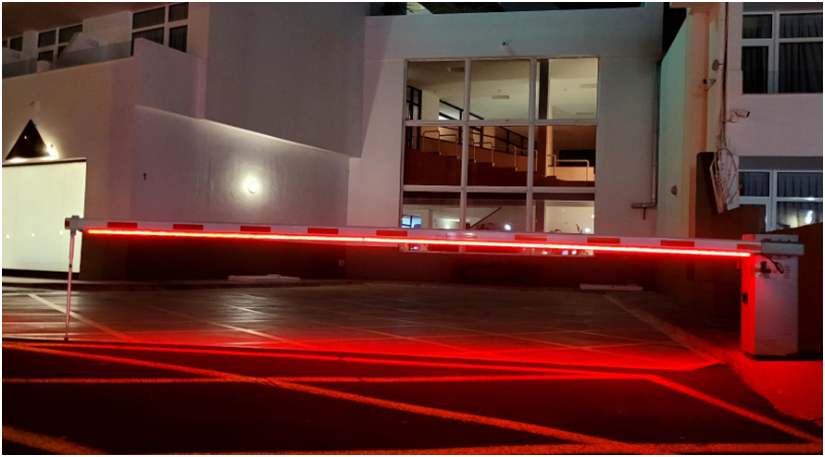
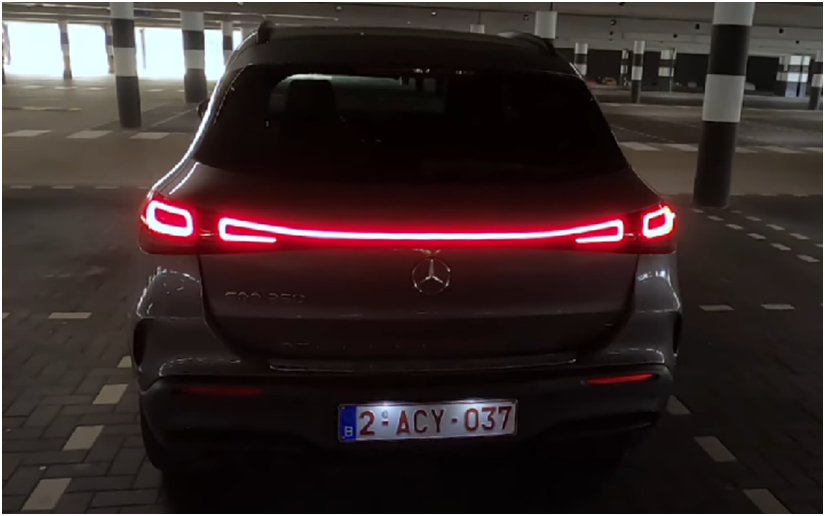
What do you see in this picture?
But in this picture?
Did you answer that there is a barrier in each of the 2 images?
In the first picture it is indeed a barrier, full picture here.
For the 2nd image, the answer is false, although intuition, social experience, memory, gave you a different answer. Full image here.
What message does the horizontal red line convey? Well, any rational person with a minimal life experience, who has lived close to civilization and everyday traffic will associate the horizontal red light with a barrier.
However, more and more car manufacturers have launched a new lighting fad, putting the tail/parking lights across the entire rear surface of the car, merging the lights from the extremities, and I’ve noticed this especially with electrified cars.
For a Coca Cola Christmas ad, this design would be great, but in traffic, this design is dangerous.
This design is not only very tiring for the eyes of the drivers behind, both during the day and especially at night, but it is a design that can create confusion. A horizontal red line says it’s a barrier, or a policeman’s signal stopping traffic. In addition, the distinction between tail light and brake lights it is done with difficulty. It would take any driver at least a second to understand when these vehicles start braking, so I would lose a few tens of meters of braking.
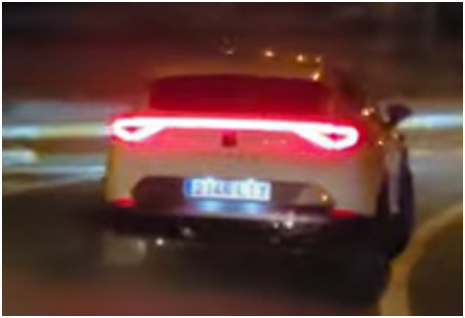
In this picture is a Seat Leon braking. The distinction between the tail light and the brake light is very little perceptible. The 3rd brake light is on the common line with the tail light. If the driver of this car brakes while I’m looking at the speedometer, the radio, the rearview mirror, admiring nature, or just being distracted and inattentive, for sure, I will lose precious seconds until I realize that the car in front of me, is braking.
I find this type of design extremely dangerous! Safety doesn’t have to be a fad.
The lights rule on vehicles should remain simple and clear:
2 low intensity red lights, at the rear extremities of the vehicle, for the tail light
3 red lights of higher intensity (2 lights at the extremities and a central horizontal light in the visual field) for the brake.
In this way, any driver behind will be able to understand from the first second if the vehicle in front starts braking, without hesitating and without losing a single second of the time and space needed to brake.
To the delight of car manufacturers, the horizontal light on the entire rear surface could represent the brake light rather than the position light, because as I said before, a horizontal red line in the understanding of most drivers represents a barrier that say Stop. But the light intensity over this large area could be extremely tiring to the driver of the vehicle behind waiting at the traffic lights.
And if a horizontal line means a barrier, what could two horizontal lines mean? First of all, blinding and discomfort for the drivers behind, but also confusion for them, when the driver of this car will brake. This is the homologated light model for the Hyundai G90. Extremely dangerous!
This video captures the difference between the tail light and the brake light much more clearly, because the camera lens increases the light contrast. In reality, the human eye perceives contrast differently, the contrast being much lower and the risk of accident much higher.
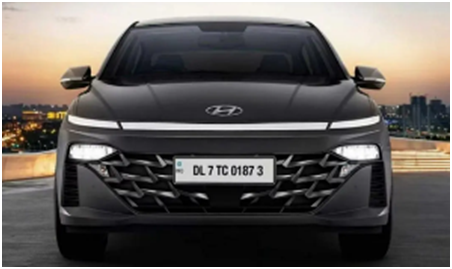
3. Horizontal daytime or position lights
What could this horizontal bar of white light be?
Well, since we discussed about horizontal tail lights earlier, you’ve probably figured out by now that this is the front light, or the front daytime running light.
It’s a nice light for a car show, but in traffic, for a driver who knows that the front position lights are 2 white light sources located at the extremities of the vehicle, this model could be confusing as well as distracting the attention of other drivers.
The position/front lights should remain the conventional ones, 2 white light sources at the extremities of the vehicle.
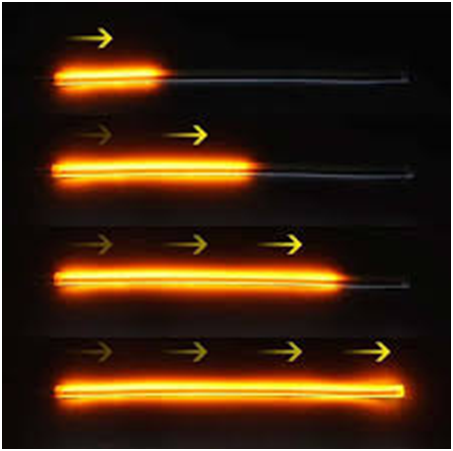
4. Signal lights
It has already been a long time since many car manufacturers put light plays in the signal lights. And to top it off, it were homologated.
Signaling of the change of direction of travel, as well as hazard/emergency lights, must be visible lights and attract the attention of those in traffic, and their intensity must be strongly perceptible.
In contrast, the light in the passenger compartment of the car turns on and off with variation in intensity, because the human eye perceives brightness, or the lack of it, more slowly, ensuring the comfort of the driver and passengers, in order not to expose the retina to sudden changes in brightness.
Dynamic signaling is dangerous because it makes the light signal less perceptible as there is a variation in light intensity from low intensity to high intensity. This makes the play of light less contrasting and less perceptible, especially since the dynamic makes the maximum light intensity only occur for a very short time.
Light signaling must be easily and immediately perceptible, especially in the case of emergency signaling, when the yellow indicator lights are also combined with the brake lights. The higher intensity of the brake lights could cover the intensity of the yellow lights, at least in the first part of the dynamics.
5. The surface and luminous intensity of the brake or tail lights
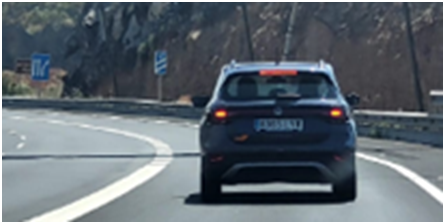
Fashion should not affect road safety. I know I’m repeating myself, but I’m sure you’ve also noticed that the surface of the lights is getting smaller and smaller in the lamps of some cars. This image was captured at a distance of about 25-30 meters.
As can be seen, the lights of this braking vehicle can barely be seen due to the too small lighting surfaces. If the image had the sun behind it, or in the driver’s field of vision, the brake lights would not have been noticed.
At 80 km/h a vehicle travels 22.22 m per second.
At 120 km/h a vehicle travels 33.33 m per second.
If the vehicle in the picture had braked suddenly, I would probably have lost at least a second to perceive it, resulting in an accident.
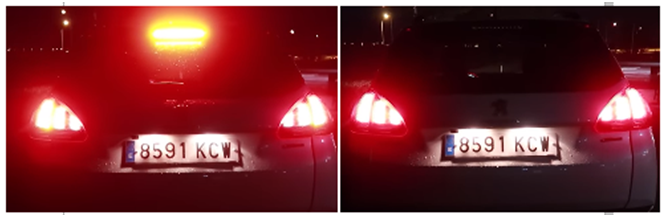
On this Peugeot, the difference in visibility between the tail lights and the brake lights is only the 3rd brake light, because the surface of the brake lights in the side lamps are so small that they are barely noticeable, even though the camera lens is much more sensitive than the human eye. If the 3rd brake light fails, the risk of an accident is certain.
In the Opel Mokka, the brake lights at the ends of the car have a lower light intensity than the 3rd brake light, barely visible, and in combination with the signaling, the distinction between the 2 light is almost zero.
It is a serious error that these vehicles were approved with these lighting deficiencies because they can cause confusion, and confusion, or a second delay of reaction, leads to accidents.
We know that the homologation of vehicle lights takes into account the luminous intensity of the lamps, which must be within the parameters of the regulations, but if the luminous surface is too small, or too large, it affects the perception of light by individuals.
If in conditions where the tail or brake lights are clean and the asphalt is dry, and the daytime visibility is good, these lights are barely perceptible, in conditions of rain, fog, dirt, slush, mud, snow, the perception of these lights, with a small exposure surface, will be further diminished.
The fashion trend is to either minimize or overextend the lights. If this trend continues, what will happen at the next generation of cars?
Without active involvement of the authorities, we will either have LED billboards or tiny LED signals like a phone flashlight. On the Toyota Yaris, the design engineers even managed to make the brake lights as small as a phone flashlight. Toyota’s design engineers managed to put the brake lights on the Yaris model, the size of a phone flashlight. Maybe they thought of the Christmas tree lights?
6. Emergency lights
Although there are rules and regulations for new cars to be equipped with emergency brake assist devices, they are ineffective when braking is done slowly because the device does not sense sudden braking and does not activate the hazard lights.
In the situation when we drive on a crowded highway in column, at cruising speeds, and somewhere in front there is a traffic jam due to an accident, a broken down vehicle, or a blocked traffic junction, there is a risk that those behind the column will not notice this in time and lose precious seconds in the braking process and thus collide with those in front of them.
I used to say that road signaling mean communication. If the drivers of vehicles arriving in a traffic jam do not signaling their reduce speed by more than 20 km/h, those behind them will not understand from the brake lights alone that something is happening in front of them to cause them to brake suddenly, so most people, when they notice the brake lights of the vehicle in front of them, will just take their foot off the throttle pedal. Then, when they will realize they are getting too close to the vehicle in front, they will brake suddenly, but they will have lost precious seconds and tens of meters of distance needed for reaction time and braking time.
At 80 km/h, a vehicle travels 22 meters per second
At 100 km/h, it travels 28 meters per second
At 120 km/h, it travels 33 meters per second
At 130 km/h, it travels 36 meters per second
These are the precious seconds that make the difference between safety and tragedy. A driver needs at least 2 seconds to start braking the vehicle he is driving. This means that he has lost 44 – 72 meters behind a vehicle that has been braking for a long time. To this lost distance, the braking distance is added.
The automatic braking systems that are mandatory from 2020 for new cars are a great solution, but ADAC (Germany) tests have shown that these systems still have functionality issues and cannot provide total safety. Furthermore, for older vehicles that do not have these systems, the risk of rear-end collisions remains relevant, given the slow replacement rate of the fleet. It will be decades before the entire European car fleet will benefit entirely from electronic systems that offer safety to all road users.
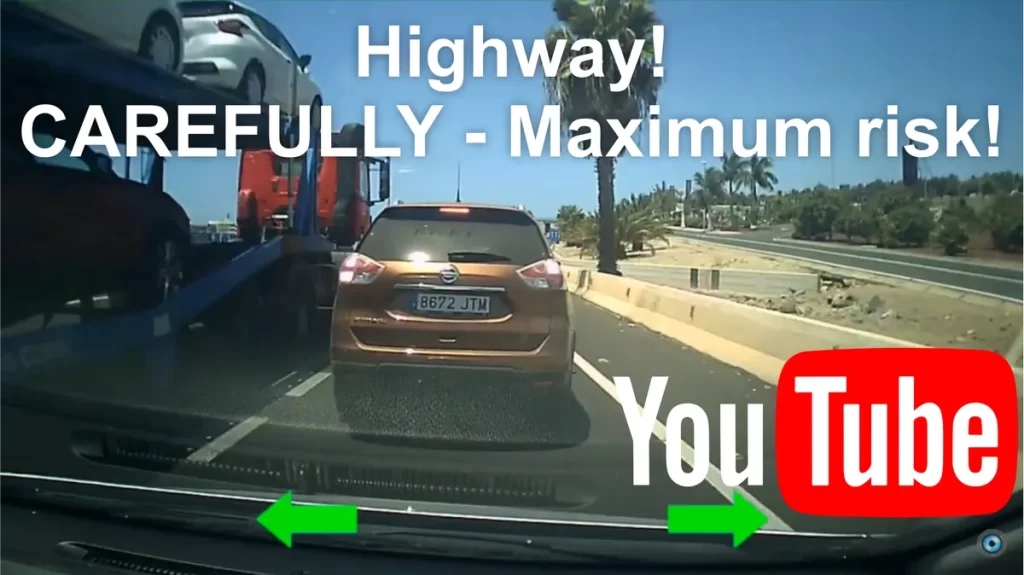
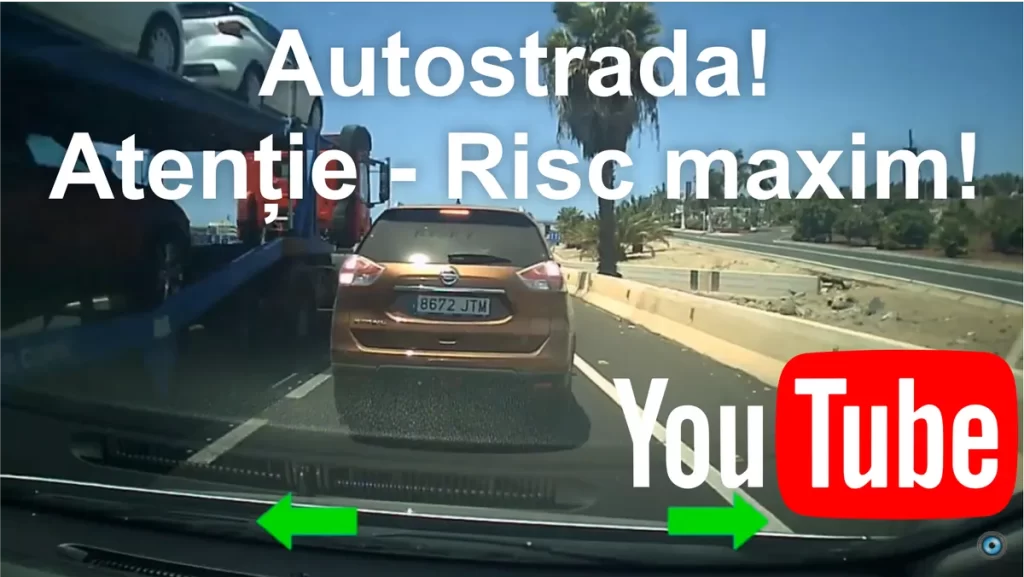
Lack of communication makes it possible for many accidents to happen inside traffic jams, and contrary communication is even more dangerous. For example, in the Canary Islands there is a local invention that is not known to the millions of tourists who visit the islands every year. Canarian drivers signal left when they reach a traffic jam, or then they stop at pedestrian crossings.
When you see in the first lane of the freeway that the vehicle in front of you is signaling left, you expect that vehicle to overtake, which means that it is accelerating or at least maintaining speed, not that he will slowing down or will stopping. When you see in the second lane of the highway that the vehicle in front of you is signaling left, you think that he is in a hurry and wants to tell the driver in front of him to change the lane, to clear the second lane, not that he will slow down or that will stop.
Even with my extensive driving experience, I am extremely confused when I see left turn signals flashing, because I never know if there is a traffic jam ahead, or if the vehicle in front of me is overtaking.
Confused signaling is just as dangerous as no signaling at all. You can’t send the message that you’re overtaking and you will slow down or stop, because those behind you will react according to the messages you send through the signals.
An international norm is needed, which states that when a vehicle slows down by more than 20-30 km/h from the (legal) cruising speed of the road, it is mandatory to turn on the emergency lights manually, so that all those coming from behind, to be able to notice in good time that the vehicles in front of them are entering a traffic jam, or that the traffic is moving at a lower speed than the legal (cruising) speed and in this way will have time to reaction and braking time.
You can view these videos starting from the 09:45 timeline.
In conclusion, I believe that in order to raise the level of road safety, it is necessary to adopt urgent measures for all the signatory states of the conventions regarding traffic on public roads to adopt effective measures through complementary rules that establish:
The 3rd brake light should be mandatory for absolutely all vehicles and must be located in the field of vision of the rear drivers.
Horizontal tail lights, on the entire surface between the extremities of cars should be prohibited, and vehicles already in circulation should be recalled to the workshops to reduce these lights, only in the area of the extremities.
Dynamic signaling should be banned in favor of classic flashing signaling and I think this can be done very easily from the car’s software.
The illumination surface of tail, turn and brake lamps should be done by changing them with lamps that provide better brightness, with a minimum surface of 40-50 cm², or an optimal surface determined by specialists.
Brake lights should never overlap with position lights, that is, they should be drawn in different geometric spaces, even if they are located in the same lamp.
Emergency (hazard) lights must be switched on manually by drivers of vehicles approaching a traffic jam or a traffic situation that requires speed reduction by more than 20 km/h from cruising speed.